Showing posts with label mesora. Show all posts

Monday, August 29, 2022

A Review of Yosef Ofer’s “The Mesora on Scriptures and its methods”

A scribe’s work is centered around the scripture’s text, and in the course writing a Torah Scroll, every word is accorded a great amount of importance and holiness. I spend a lot of time with the Torah’s text and I have therefore developed a great deal of interest around the development of our Mesora - tradition - of the accepted Torah text. 

After some research, it became clear that to understand how our text became universally accepted by communities around the world, the best course of action was to study the 10th century Tiberian Masoretes. While some scholars like Prof. Emanuel Tov go further back all the way to the Dead Sea Scrolls, which are much older, the Tiberian Mesora was the point of harmonization of the text and we have many resources to study it today, more than ever before. 

Yosef Ofer’s The Mesora on Scripture and Its Methods was translated from Hebrew in 2018 and it is a great study.  It’s a detailed, balanced and informative account that is surprising easy to read, occasionally delving into intricate grammatical minutiae. Ofer is a student of Rabbi Mordechai Breuer Z"L, a leading expert of the Mesora and Aleppo Codex, and I always prefer to learn from professors who have a religious background and reverence to the text, so Ofer's book is a great choice.

Although the study of Talmud and scripture is widespread in religious communities today, the study of the development of our holy text has almost become taboo, and most institutions will stick to the story that the text as we have it is immaculate and that’s the end of the discussion. 

The basic description of the work of the Masoretes goes heads on against this assumption, as their occupation was precisely determining the most accurate text according to their traditions and manuscripts, and there were differences in the texts used around the communities at that time. The work of the Masoretes was the attempt to harmonize and define the ultimate text, culminating in the writing of the Aleppo Codex by Ben Asher, the definitive Codex endorsed by Maimonides. 

While we may have the impression that the Tiberian Mesora is not really necessary for the study of scripture today, the truth is that many commentaries often refer to it. Rashi, as pointed out by Ofer in pages 248-250, occasionally mentions the “Mesora Gedola” when giving an explanation to a verse, the Radak often mentions the Masoretes - and most students will not understand the reference unless they know the basics of the Tiberian Mesora. 

I found very interesting Ofer’s discussion about the alternative Mesora - the Babylonian Mesora studied in the Yeshivot in Bavel around the 9/10th century. The cantillation signs created by the Tiberian Masoretes differ greatly from their Babylonian counterparts, both in form and usage. The Babylonian Mesora fell in disuse, even though it was the tradition used in the circles that created the Talmud - the academies of Sura and Nahardea. The differences in question are rather minor although still significant - plene and defective spellings, arrangements of the two songs of the Torah (Shirat Hayam and Haazinu) and kri/ktiv special words, which are written but pronounced differently. 

The Tiberian cantillation signs became the norm, even if the actual way of pronouncing them differ from community to community - Ashkenazi, Sephardi and Yemenite ways of reading are all unique. See below the cantillation names in Hebrew; I wish Ofer would have spent some time going through them and their terminology.

(It's worthwhile to note that the Vilna Gaon frequently used the names of the Tiberian cantillation signs in order to find meaning in the text - see here one of my original posts on this and the ensuring discussion in the great parshablog).


Ofer notes that the Masoretes did not explore the topic of open and closed passages, which is subject to many discussions (Rambam vs Rosh, for example) and have serious Halachic ramifications. Clearly, the Masoretes specialized in the correct spelling of the words exclusively, ignoring open/closed passages and also any attempts to explain why letters were spelled plene or defective. The goal was solely to preserve the correct text, nothing else. 

And this approach did not sit well with Ibn Ezra, who openly criticized the Masoretes’ focus and resistance to elucidate the text according to their notes as mentioned in the book. 

Ofer did not speak about the debate whether Ben Asher, the most famous masorete, was a Rabbinic or Karaite Jew. I find this discussion pertinent in the context of the religious implications of the Masoretic text, and I assume he did not discuss this topic because we lack evidence to make a credible analysis, however there's academic research on this topic (see here a great resource from Prof Geoffrey Kahn) and the overall interchange between Rabbinical and Karaite communities. It's very interesting that both Rabbinic and Karaite communities adopted the Tiberiam Mesora unconditionally, even though the two sects were in constant disputes.

Ofer mentions briefly the influence of Rabbi Meir Aboulafia, who’s opinion impacted the texts currently used by Sephardim and Ashkenazi Torah Scrolls. However I wish this would be developed further, as Aboulafia was single-handedly responsible for the unified, common text of Sephardi and Ashkenazi communities - no small feat considering that the Ashkenazi communities were far away from him and very fragmented. He lived not long after Ben Asher in the 11th century and I would assume his impact on the text is relevant to the understanding of the spread of the Masoretic text. 

I like how Ofer teaches the reader like a student, first by going through examples and then by leaving open questions about the theme explored. It feels like a real lecture, and now I know how to read masoretic notes and abbreviations thanks to his exercises. 

Now I’m looking for a study of the post Masoretic text and how it was kept, and this will require a study of Rabbi Meir Aboulafia, Rabbi di Lonzano and the Minchat Shai - they are the Halachic reference for the text we use today. Professor Ofer has another book on the Minchat Shai so I hope to have a chance to study it soon and continue in the quest to understand not only how the Masoretic text was set but also how it came all the way down to our hands today. For the topic of the Tiberian Mesora in itself, Yosef Ofer's work is very thorough and a real gem.

Tuesday, December 18, 2012

The Aleppo Codex: Book Review from a Scribe's Perspective

I've been meaning to write about the Aleppo/Ben Asher Codex for a long time. Now that Matti Friedman came out with a masterpiece book on this topic, I will try my best to write about how this Codex is very relevant for Safrut enthusiasts and scribes in particular.

Briefing

Until now I had only seen books on this subject from scholars, aimed for the academic audience. Matti's book is a mainstream book written like a thriller, so it's a very enjoyable and easy read. Matti is careful to create an interesting story line while sticking to the facts and stating his sources in the appendix, chapter by chapter. He successfully provides the full context in which the fabulous story of the Codex took place and goes back and forth in time delving into the historical relevance of the book and also how it affected so many different people and communities throughout its existence.

The Story (short version + spoliers)

The Ben Asher Codex was written sometime in the 10th century c.e., in Tiberias while the  Masoretes were focusing in gathering and establishing the Mesora of vowels, words and missing letters of the Torah. Aaron Ben Asher was the prince of the Masoretes and his codex was widely believed to be the most accurate ever produced, an opinion shared by Maimonides when he saw this book in his own desk in Fustat some centuries later.

The Codex eventually was brought to the Aleppo community, where it was guarded for many centuries until the Arab riots following the creation of the State of Israel. That's when Matti's book gets more interesting.

In 1958, the Aleppo Rabbis sent the Codex with Faham, who was fleeing to Israel via Alexandretta (Turkey). Faham was supposed to give the Codex to the head of the Syrian community in Israel but instead, he gave it to the head of the Aliya Department, Shragai, who gave it to the then President of Israel, Ben Tzvi, a turn of events that triggered a court case a few years later.

The big question discussed in Matti's book is the fact the only about 65% of the Aleppo Codex is in possession of the Ben Zvi Institute in Israel today. What happened to the rest? Interesting to note that the missing pages pretty much cover the whole Bible part of the Codex - the most important section. What we have today is pretty much most of Book of Prophets (Neviim) and Book of Writings (Ketuvim).

To summarize Matti's research, all the possibilities are narrowed down to two options. Either the agent of the Aliya Department in Alexandretta stole the missing parts from Faham, who publicly complained he had been robbed there. Or the Codex was received by President Itzhak Ben Zvi in its entirety but after it was stored in the Institute, someone stole it - other very important manuscripts were reported missing in the early days of the Institute. These two possibilities were and still are potentially very embarrassing for the Israeli authorities so the Institute did their best to cover-up and have always adopted the version that the missing parts were lost in the mob of the Aleppo synagogue, a version that is conclusively not true according to Matti. He also brings good evidence that the missing parts were actually in the manuscript black market as late as 1985, in a colorful story featuring the Bukharian jeweler Shlomo Moussaief (see here a NYT Magazine article based on Matti's book with some additional reporting)

Sample page of the Aleppo Codex
Halachic Status of the Aleppo Codex

The Rambam (Maimonides) explicitly pushed for the usage of the Aleppo/Ben Asher Codex, and here you can see verbatim:

:(משנה תורה" (הלכות ספר תורה פרק ח הלכה ד"
וספר שסמכנו עליו בדברים אלו הוא הספר הידוע במצרים שהוא כולל ארבעה ועשרים ספרים שהיה בירושלים מכמה שנים להגיה ממנו הספרים ועליו היו הכל סומכין לפי שהגיהו בן אשר ודקדק בו שנים הרבה והגיהו פעמים רבות כמו שהעתיקוּ ועליו סמכתי בספר התורה שכתבתי כהלכתו


Although the Rosh argues on the Rambam in regards to the layout of the "open" and "closed" Parshiot (see my post about this here), the Shulchan Aruch ruled that if it's impossible to write it in a universal layout, which both Rambam and Rosh will agree, one should follow the Rambam because he had the Aleppo/Ben Asher Codex in his possession and based his opinion on this Codex, which is superior to all others. Therefore the opinion of the Rosh is "overruled" by the Ben Asher Codex.

After the Ben Asher Codex found its way to Aleppo, the community safeguarded it as a holy relic and effectively made it impossible for other communities to fully study it, so its unique features remained unnacessible for the Ashkenazi scribes by and large throughout the centuries.

Halachic Implications of the Codex

As the years passed, the Ben Zvi Institute made the Aleppo Codex available for the public and recently many groups started to push its adoption for the scrolls of the Na"ch. The Aleppo Codex differs from the traditional layout used in Megillat Esther, for instance, and that alone would be a significant controversy since all Jewish communities use this scroll in Purim for public readings, and any change would no doubt bring disputes.

But aside from the Megillat Esther issue, some communities have custom of reading the Shabbat's Haftarot from scrolls and adopting the Aleppo Codex would also bring disputes. This custom was instituted by the Gr"a, one of Judaism's brightest minds, and anybody living in Jerusalem has seen this numerous times - many of the early settlers of Jerusalem were disciples of the Gr"a and in general, the holy city follows his customs. The Gr"a instructed the scribes to use what is known in the field as the Berditchev tikkun layout, a puzzling book that doesn't conform with the Aleppo Codex layout in the Neviim and Ketuvim.

So in no time, there was a battle between the Jerusalem-based disciples of the Gr"a, who always wrote their Na"ch scrolls according to the Gr"a's Berdichev tikkun versus Bnei Brak, one of Israel centers of Torah learning and a city who generally doesn't follow the Gr"a customs. The Bnei Brak-based groups favored the use of the Aleppo Codex, as it is undeniably the most accurate one.

So any scribe trying to buy a Tikkun, his personal codice to guide him in layout and spelling, will find different options depending where he goes. In Jerusalem, the shops will usually sell Tikunim following the instructions of the Gr"a while in Bnei Brak you will see some Aleppo Codex options too. But even more than that, there's a war of words betweeen the two camps, and when I got my Tikkunim, I snapped some pictures from both sides' claims. See below, the first two are from Talmidei HaGra and the last is from the Aleppo Codex backers.


So as you see, the 65% of what we have from the Crown already brought considerate challenges and disputes in the Safrut world and not all have backed its adoption. You can only begin to imagine what would've happened if we had all the Codex, more specifically , the Bible part. While the usage of scrolls for Na"ch is limited, all Jewish communities and synagogues have numerous Torah scrolls and continue to write new ones every day. If the Aleppo Codex for the Bible would be available, I anticipate that we would have a similar, but much more heated war of words and I wonder how many communities would start adopting the Aleppo Codex for their own scrolls.


Thursday, March 29, 2012

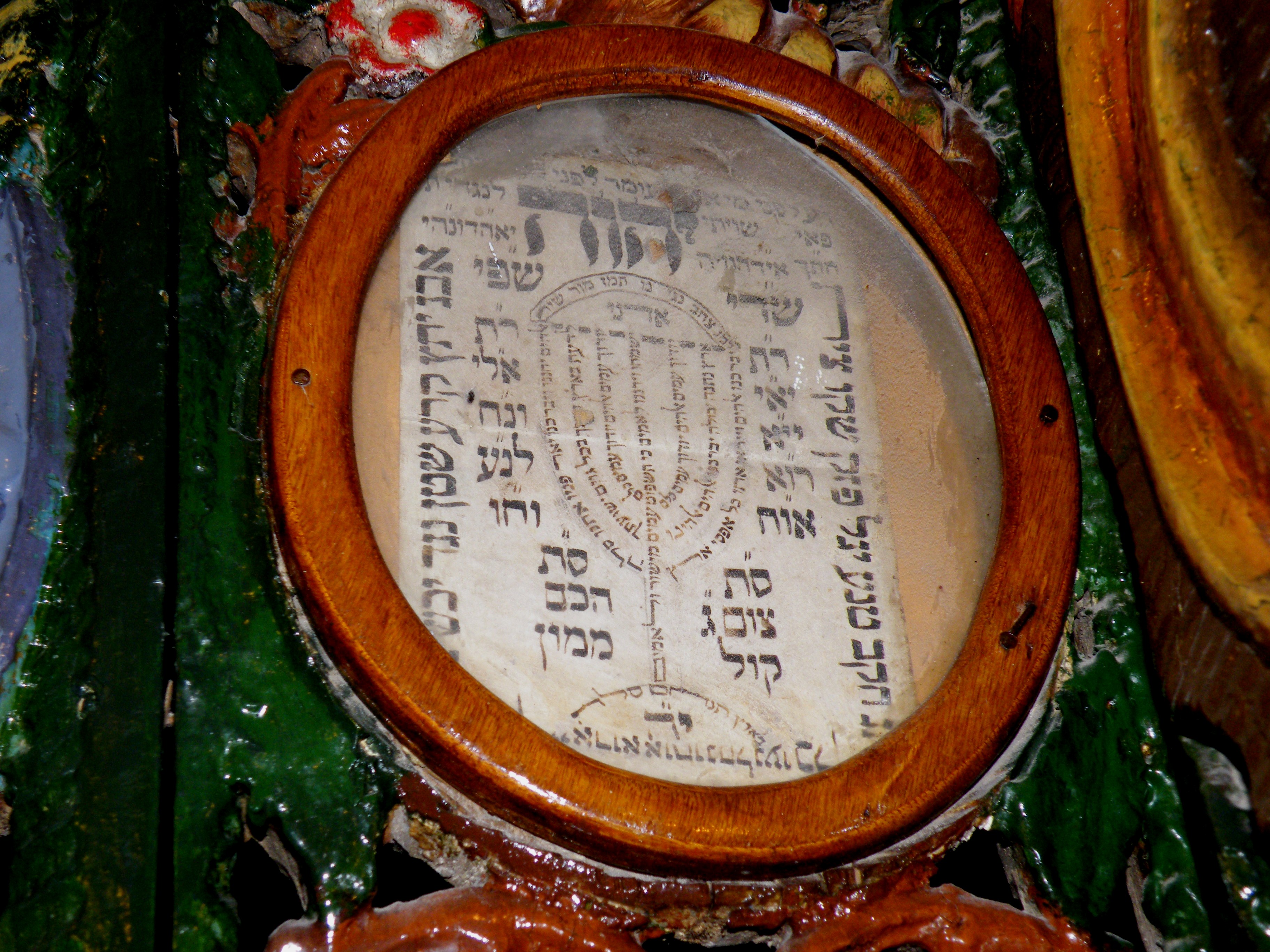
Menorah-shaped Lamnatazeach - full post

What's the source of the Menora-shaped Lamnatzeach? I touched on this subject last year but now I will write it in full.


The earliest source, I believe, is the Abudrahem, a student of the Baal Haturim (son of the Rosh) who lived in 14th century spain (see inside the Sefer here)
ובמקצת מקומות אומרין אותו כל יום  מפני

 שנקרא מזמור המנורה  והקורא אותו בכל יום נחשב

 כמדליק  המנורה  הטהורה  בבית המקדש  וכאלו מקבל

 פני שכינה כי תמצא  בו ז׳ פסוקים כנגד  שבעה קני

 המנורה  
In some places (the Lamnatzeach) is recited every day since (this psalm) is called the Psalm of the Menorah and when you recite it everyday, it is considered as you lit the Menorah in the Beit Hamikdash (...)
The Abudrahem goes on to explain that this Psalm has 49 words which relate to the 49 different parts of the Menorah - thus why we always recite this Psalm after counting the 49 days of the Omer.


Another possible early source for this claim is the Ramban, who reportedly brings this same commentary in one of his letters adding that it should be recited specifically at sunrise, but this letter is not to be found presently.


Rabbi Yitzhak Haezovi (Turkey, 15th Century), in his sefer Agudat Ezov, confirms that there's a tradition that "whoever recites this Psalm throughout the 49 days of Omer nothing bad will happen to him that year". Perhaps you shouldn't take this lightly because he adds that King David took this very seriously:
"This Psalm was engraved in gold in King David's shield, made like the shape of the Menorah and when he went to wars he would meditate upon it (...) and with it he would win his enemies"
The Agudat Ezov goes on to say that it's good to have it embroidered in the Aron of the synagogue to protect the community - which explains why you always see this Menora Lamnatzeach in the Sephardic shuls today. 


Another early Kabbalist that mentions this is the Akeidat Yitzhak, who was one the last Rishonim who lived in the Golden Years of Spain's Jewry in the 15th century, and he pretty much mirrors what the Agudat Ezov said - see here in full.


The Chida, one of the greatest Kabbalists of the 18th century, adds that it should be recited from Klaf - parchement (direct source here). 


I must also highlight this fascinating piece from the Ben Ish Chai, arguably the most respected Kabbalist of the 19th Century and a household name in every Sephardic home, who says that you don't need specifically klaf - any paper is fine according to him - but he adds a powerful twist:


כשאומר למנצח בנגינות מזמור שיר המצוייר בצורת המנורה על קלף או על נייר, יזקוף את הציור של המנורה שמסתכל בו כדי שיהיה הציור זקוף לפניו כדמיון המנורה שהיתה זקופה ועומדת בהיכל ולא יניח הציור מושכב ושטוח לפניו

"When you recite Lamnatzeach written in the shape of the Menora either on Klaf or on a paper, you should hold it standing so you can see it in front of you just like the Menora which was standing in the Heichal, rather than leave the drawing flat"


Fascinating comment. I bring it because it illustrates how dear this Psalm is to all Kabbalists, early and contemporary, to such an extent that they even instituted it in the everyday prayers of the 49 days of the Omer, something that today is standard practice in virtually all Jewish communities. From there, as the Abudrahem mentioned abovesome people started to say this Psalm every day and, as we see today in our Siddurim, it is recited just before Baruch Sheamar in Shacharit (nusach sephard and edut mizrach). That placement is puzzling because the Ari, who basically reorganized what is today Nusach Sefrad and Edut Mizrach, actually said that we should mention it at the end of Amida, right before Elokai Netzor:
ולכן יהיה תמיד נגד עיניך גם תאמר בכל יום אחר תפלת ערבית ומנחה ושחרית אחר העמידה קודם אלקי  (full text here, difficult read) נצור מזמור ס"ז והוא מזמור למנצח בנגינות מזמור שיר


I've seen that Rabbi Pinchas Zbihi brings why we recite it before Baruch Sheamar; something to do with the daily ritual of the lighting of the Menora but that's beyond the scope of this already complicated post.


Interestingly, Rabbi Zbihi elsewhere says that the Abudrahem - who said that reciting Menora Lamnatzeach is like lighting the Menora - might explain why we say it every weekday mornings but not on Shabbat. If it is like lighting the Menora that is a forbidden Melacha (!) and that might explain why our Siddurim have another Psalm in its place.


The big question is why the vast majority of Siddurim don't print this Menora layout both before Baruch Sheamar and also by Sefirat Haomer. As we have seen, the point is not only to recite this Psalm but to recite it in this specific shape and we rarely see this in contemporary siddurim. 


But to finalize this post, I must mention a very practical consideration. There is a very famous discussion concerning the exact look of the Beit Hamikdash's Menora and this has implications for the Lamnatzeach Menora. The Maase Choshev says that the Menora was curved, as seen in the infamous Arch of Titus and many archeological findings. It happens to be the the vast majority of Menorah Lamnatzeach follow this layout, as seen below:

There's one major problem with this layout - it's very difficult to make round "Sirtut" (guiding lines) and as the Talmud in Sanhedrin notes, it's forbidden to write more than four words in parchement without guiding lines. Aside this technical problem, Rashi and Maimonides held that the Menora was not curved but straight - the late Lubavitch Rebbe actively advocated (see Likkutei Sichot vol. 21) to spread this layout and that's by the way why all Chabad's public Menoras in Chanukka are always straight. For these reasons, there's an alternative Lamnatzeach:

I however never saw this layout in any synagogue; it's not very popular. But a third layout, which is squared and doesn't conform with any of the two opinions mentioned above, is extremely popular and present in many Chassidic synagogues. It is also printed in my Ktav Ashurit Siddur:


I speculate that because of the Sirtut problem in the rounded layout, Sofrim started to write the round Lamnatzeach in this way which resembles the rounded scheme and at the same time has regular straight guiding lines (Sirtut). 


Last week I received a long awaited shipment of red Gvil parchement and it was just big enough to write a Lamnatzeach Menora. I used the square layout because I think it's the nicest and also because it's the middle way between the rounded and the straight Menora. I will record my experience with this Gvil in another post.

Monday, January 24, 2011

Ktav Ari

Check my previous post on the different Ashurit scripts before reading this one.

The Ktav Ari is one of Safrut's most fascinating topics for me. Actually, the Arizal in general always fascinated me, as few other individuals have impacted Judaism as much as he did.

First, it's important to understand who he was. Here is Wikipedia's take on him:

He was born in Jerusalem[1] in 1534 to an Ashkenazi father, Solomon, and a Sephardic mother;[6] died at Safed, Ottoman Empire controlled land of Israel July 25, 1572 (5 Av 5332). While still a child he lost his father, and was brought up by his rich uncle Mordechai Frances, on his mother's side, atax-farmer out of Cairo, Egypt.
At the age of fifteen he married his cousin and, being amply provided for financially, was able to continue his studies. Though he initially may have pursued a career in business, he soon turned to asceticism and mysticism. About the age of twenty-two years old he became engrossed in the study of the Zohar, a major work of the Kabbalah that had recently been printed for the first time, and adopted the life of a recluse. He retreated to the banks of the Nile, and for seven years secluded himself in an
isolated cottage, giving himself up entirely to meditation. He visited his family only on the Shabbat, speaking very seldom, and always in Hebrew.
The Ari passed away at the early age of 38 but his teachings changed Judaism in an unprecedented manner.

Until his time, there were two scripts - Veillish and Beit Yosef. In fact, the Beit Yosef lived in the same town as the Ari and was that generation's main posek.


The Ari introduced a new script that wasn't entirely "new". He made a mix of the Veillish and Beit Yosef, a new Ktav that incorporated characteristics of both scripts. Namely, he incorporated the "inverted Tzadi" from Veillish but also the Ashkenazi Peh. He did introduce some very subtle novel details based on his Kabbalistic teachings, but all in all, the major change was the inverted Tzadi. And he was heavily criticized for that "change".

Perhaps he was inspired by his hibrid Ashkenazi/Sephardic upbringing to make this new "intermediary" ktav. The Ari believed his generation needed some specific "Tikkunim" and he adapted the way we write our holy scrolls to achieve these mysterious Tikkunim. For instance, the white Bet inside the Peh, the Chaf within the Shin and the Chet comprised of a Vav and a Nun. But above all, he instructed scribes to write the Shem Hashem in a very unique and difficult way - in parts - based on the Zohar. All these are very subtle details that are inspired by his Kabbalistic teachings and he sought to perpetuate them in his Ktav - the Ktav Ari.

The Ari's changes were recorded by his student Rabbi Chaim Vital and it was clearly intended to be used only when writing Tefillin. But why only in Tefillin? That's subject to debate, but the most compelling reason I've heard is that changes motivated by Kabbalistic reasons shouldn't be evident when a person reads a scroll. It's ok to make a change that is subtle and hidden but to do it in a Torah Scroll, for instance, would be too evident and undesirable. The parshiot of Tefillin, in the other hand, are always hidden and if a scribe makes special details in it nobody will actually realize. That's why the Ari was very specific about using his Kabbalah-inspired Ktav only in Tefillin.

You are surely thinking "what about Mezuza?", after all the Mezuza is also hidden. I haven't heard a very good answer but I have my own speculation. Even though the Mezuza is hidden, the word Sha-dai is always visible (it should be, at least in theory) and you would be able to notice that the Ari Shin is different than the usual one.

Be it as it may, the Chassidic scribes always wrote Tefillins with the Ktav Ari - that custom was universally accepted by them. I don't know if that was the case with Sephardic Jews. I do know that the non-Chassidic Ashkenazi Jews never adopted the Ktav Ari in the scrolls.

It's hard to pin point an exact date, but slowly the Chassidic scribes started to use the Ktav Ari in Mezuzot and even Sifrei Torah, and today virtually all Chassidic sects have Ktav Ari Sifrei Torah in the Synagogues. It's hard to understand what's their justification as the Ari clearly did not intend to change the way Mezuzot and Torahs are written. In fact, I would bet that the Ari's own Sefer Torah was written in either Veillish or Ktav Ashurit; not Ktav Ari.


One Chassidic Rabbi was very critical of this practice - the holy Divrei Yatziv of Zanz (make sure you read about his remarkable life story on wikipedia). He had a special Kisharon for Halachot pertaining to Safrut (for instance, he figured out a revolutionary way to make the Batim of the Tefillin - but that's a topic for another post) and was very much against the use of Ktav Ari in Sifrei Torah, even for writing the Shem Hashem.

But Minhag Israel Torah and there's Halachic backing for writing Torahs with the Ktav Ari. The Mishnat Avraham (source) says that there's no problem to write Torah Scrolls with the Ktav Ari and bless the scribes who do it - "Tavo Alav Bracha". And he brings an Halachic justification for it: the Sefer Torah should be written in the same way Tefillin are, because if you write Tefillin with Ktav Ari and Torahs with Ktav Beit Yosef this will cause a Tartei DeSatrei (contradiction) when a person gets an Aliyah. Tartei DeSatrei is a well-established Halacha argument and perhaps this is why Chassidic Sofrim started to write all holy scrolls in Ktav Ari - even Megillat Esther.

The question is what should I do when I start writing my Torah (yes, I plan to start it very soon). Ktav Ari or Beit Yosef?

My teacher writes Sifrei Torah in Ktav Ari and when he is commissioned to write a Torah in Ktav Beit Yosef he writes the Shem Hashem according to the Ari but makes sure this is not evident (he is afraid the commisioners might realize and dissaprove it..). I found that the Kol Yaakov mentions here that this was the Minhag of the scribes of his city, Baghdad.

At first I was thinking I would do the same, but I recently realized it wouldn't make sense to do that in my case. Here's why:

Although I'm not really Chassidic, my father's name is Yekutiel Yehuda - the name of the Divrei Yatziv of Zanz - after my grandfather's father and my grandmother was born in Cluj/Klausenburg, the town where the Divrei Yatziv lived. The Tefillin I wear each and every day was written by a far away relative who lives in Netanya and is a Zanz Chassid. And on top of that, I married into a family of Zanz sympathizers, having a Sheva Brachot in Netanya hosted by the current Rebbe of Zanz. It's crucial to follow a Mesora (tradition) otherwise a scribe can get lost in  all the different customs and nuances of Sta"m, so I have always followed the directives of the Rebbe of Zanz in regards to Safrut - I highly recommend his newly published Sefer on the Halachot of Sta"m, a book I always come back to.

Monday, October 4, 2010

Mark of Cain and the Mezuza of Egypt

In last week's Parsha the Torah talks about the "אות" Cain received after he complained that his sin (killing his brother Hevel) was too much too bare and that he was afraid of being victim of revenge:

יג ויאמר קין אל יהוה גדול עוני מנשא יד הן גרשת אתי היום מעל פני האדמה ומפניך אסתר והייתי נע ונד בארץ והיה כל מצאי יהרגני טו ויאמר לו יהוה לכן כל הרג קין שבעתים יקם וישם יהוה לקין אות לבלתי הכות אתו כל מצאו

The Midrashim speak about this Ot / אות and there a few possibilities mentioned:
  1. Hashem gave Cain the gift of Shabbos, also called an "Ot" - [אות היא לעולם [שמות לא: יז., and by keeping the Shabbat Cain was guaranteed to survive.
  2. Hashem gave Cain a dog to protect him from the other creatures.
  3. Hashem marked his forehead with one of the Hebrew Alphabet's 22 letters (Rashi)
The Zohar also mentions this last Pshat and the Peirush Hasulam, written by Rabbi Yehuda Ashleg in 1945, says that the letter is the Vav, albeit without quoting a source.

So it seems to me that there's room for interpretation here and I have an alternative option, based on the Torah Shelema's take on an old Minhag on Hilchot Mezuza. Please bare with me as I lay the background story before I move forward.

In the times of the Geonim there was a Minhag of writing additional mystical names in the Mezuza alongside the Mezuza's Parshiot. The ספר יראים brings it down here and you can see this odd Mezuza below:


The Rambam and others strongly opposed this practice and this Minhag eventually fell in disuse. But if you look carefully, you will see five letters written in an odd font at the very end of the Mezuza. Rabbi Kasher brings the first explanation, which is that these are angel names written in special Kabbalistic code, but he goes to explore a whole different possibility - that these might be Ktav Ivri letters, which is the old Hebrew script used by Jews before the times of Ezra the prophet. In regards to this second explanation, the question is obvious - why in world would five Ktav Ivri find their way in a Mezuza?

The answer is unique and extremely interesting. In the last Makah of Egypt, the angels came down to kill the Egyptian firstborns and Hashem told Am Israel to mark their door so the angels would not enter their houselhold (exodus 12:13):
והיה הדם לכם לאות, על הבתים אשר אתם שם, וראיתי את-הדם, ופסחתי עלכם; ולא-יהיה בכם נגף למשחית, בהכתי בארץ מצרים
The simple reading is that the blood will be a sign, but here again some commentators say that the sign was actually a letter, written with blood in the doorposts. More precisely, an X which is the Ktav Ivri letter for Tav, which symbolizes life (תחיה) [The Jews at that time only used Ktav Ivri and that's why they marked it like an X and not in the shape of our current Tav (ת)].

Rabbi Kasher says that because the X protected the Jews in Egypt, it's reasonable to assume that many started to add this X to their actual Mezuzot for an "enhanced protection" - after all, the Mitzva of Mezuza is a remembrance to the Mezuza of Mitzraim, which was simply an X.

That explains the first of the five letters, the X.
The five Ktav Ivri letters in the Mezuza are equivalent to תחאחא in our script and they mean תחיה אמן חיים אמן - a prayer for life. But the point is, that Rabbi Kasher identifies the X in the Mezuza as the very X marked in the doorposts in Egypt, which in turn was called an "אות / Ot".

If so, perhaps the unidentified "אות / Ot" given to Cain is here again the same unidentified "Ot" that is mentioned by Yetziat Mitzraim - the X, or Tav. But why would Hashem give out of all letters the Tav?

The explanation is the same as in Yetziat Mitzraim: Tav is the initial of תחיה, "you shall live", and it was Hashem's guarantee to Cain that he would not be murdered - that is, that he would live.

So after we connect the "אות / Ot" of Cain, to the "אות / Ot" of the Ktav Ivri Mezuza, which in turn is connected to the "אות / Ot" of Egypt, we have a consistent explanation of which letter is bring alluded all along - the X, the Ktav Ivri equivalent of our Tav.

Below you can see the source, which is the Torah Shelema (by the way, a hard to find but invaluable resource to anyone seeking clarity in the topic of Ktav Ivri and Ktav Ashurit). 


Sunday, September 19, 2010

Haazinu and Bnei Haman


Last year I wrote about Shirat Haazinu's differing Mesorah in regards to the quantity of lines this song should have (link here). Since then, I came across a related question - should the Sofrim stretch the lines so they all look exactly symmetrical? Look below and you will understand the two options:  

In my earlier post I wrote that the Ashkenazi Sofrim stretched the lines possibly because of Zeh Keili VeanVeihu, that is, because it looks nicer. I did some further research into this and in turns out that this is already suggested by the Ran (Rabbeinu Nissim, 990–1062), who seem to say that the two columns of Haazinu and also Bnei Haman in Megilat Esther should be perfectly symmetrical (click here for full commentary):
פירוש כשהחומה שוה בשני ראשיה ואין בה בליטות אין להוסיף עליה כמו אם היו שם בליטות ושיני החומה שאז יוכלו להוסיף על הבנין
The Noda BiYuda [18th century] quotes the Ran and is even more insistent about this, suggesting a change in the lines' structure in order to make the columns more symmetrical (here's in full):
ודאי שהיה בזה קפידא ומהראוי לתקן ולמשוך השורות ועלה בדעתי להעמיד מלת הצור שבשיטה שאחריו למעלה להשוות השיטות
The Maharam DiLuzanu however disagrees and claims that the Ran was not implying that all sides should be symmetrical - the Ran was solely referring to the column of Bnei Haman to the left, which is always perfectly symmetrical: The Minchat Yitzhak [1902-1989] has a responsa about this and brings more sources, finally concluding that for Hiddur Mitzva, the columns in both Haazinu and Bnei Haman should be symmetrical, but he strongly disagrees with other commentators who raised the possibility of this being Leicuva, mandatory. It's a pity I only came across this now, as I already wrote my Megillat Esther not symmetrically(see here).. But this conclusion is only valid for Ashkenazi Jews, as the Ran wasn't categorical about this and both the Noda BiYuda and Minchat Yitzhak are Ashkenazi. The Yemenite Jews evidently disagree with this idea, as their Torah have completely asymmetric Hazinu columns. And as noted in my other post, they are supported by the Aleppo Codex, which means that their version is most certainly the correct one. So my Megillat Esther could have been written symmetrically, but perhaps through my mistake, I actually wrote the very best pattern after all?

Thursday, February 11, 2010

The New and Old Peh

If you look at old Ashkenazi Torah Scrolls, Tefillin and Mezuzot, you will always note a very distinctive Peh. This old Peh has a "hunchback" and almost looks like something is wrong with it.

This Peh is referred to as the "Peh Shavur", or "Broken Peh". You can see the Peh Shavur in this old Yeriah I own:
What happened? Why and how the Peh suddenly "changed"?

Let's use reverse chronological order, that is, first understand the modern Peh. The source to the modern Peh is the Mishna Berura, who clearly rules that you should avoid using the broken Peh:
הג"ה ולא כמה שנהגו איזה סופרים לעשות עקב מבחוץ בצדה ... כי הוא ממש אות שבור. ובאמת צריך להיות עגול מבחוץ כמו שכתבנו ... ומה שנהגו כך מפני שאינם יודעים ההרגל לעשות לתפוס הקולמוס באלכסון ולהמשיכה מעט לאחוריה הקולמוס בפנים ... עכ"ל ספר כתיבה תמה בקיצור לענינינו
The Mishna Berura quotes the Sefer Ketiva Tama as the source of this ruling, claiming that the broken Peh is a mistake that should be avoided. When the Mishna Berura was first printed in the late 19th century, this ruling created a big controversy and debates in communities that had a long-standing tradition of using the broken Peh, and many Sofrim continued to write it in their old way for many years.

Then it came the First and Second World Wars, and many of the old scribal traditions were forgotten - including the old Peh. Following the wars, the rulings of the Mishna Berura became even more influential in communities around the world and the next generation of Sofrim relied heavily in the Mishna Berura's take on the Hebrew letters, effectively ignoring the controversies surrounding this ruling. That's how the modern Peh became the standard Peh in all subsequent holy scrolls.

But if you look at pre-war Torahs and Tefillins, you will often find the old Peh, specially in scrolls of eastern Europe and Russia.

For almost all readers, this is just a history lesson. But for the Chabad readers, this post is a eye-opener. The Alter Rebbe, author of the Tania, clearly writes that the broken Peh is a must and all Chabad sofrim have kept this tradition even after the wars. Thus, the Chabad communities have their own version of the Ktav Ashurit, which is different than the Ashkenazi, Chassidic and Sephardic scripts. This is known as the ktav Chabad, and the broken Peh is one of its signature characteristics. See the full Aleph Bet Chabad below:
You can also see the special Kuf, Mem Sofit and Tet prsent in this Ktav.

The Ktav Chabad is exactly the same Ktav used by the communities of Eastern Europe and Russia before the war. So the Ktav Chabad has survived the war to become one of the last standing old-European scripts in use, remarkably. Now you understand the tradition among the Chabad Chassidim that their Ktav is the most accurate and that when Moshiach comes it will become the standard script for all Jews. Perhaps it will.

UPDATE: In reponse to the questions raised in the comments thread, I did some further research and here's what I came up with. My source is Sofer Lipshitz, one of the most knowledgeble Sofrim I know, who happens to be Chabad. The real Old Peh, which is the modern-day Chabad Peh, ideally should have a smooth hunchback and not a real step - see this picture (note that the Chabad Aleph Bet picture above is not very precise):

However, there are many different versions of this hunchback Peh and some of them are a bit less precise then others. The Peh of my manuscript is one of these less precise Pehs - it's more than a slight hunchback and it really looks "Shavur", and perhaps this imprecise version of the Peh prompted the Ktiva Tama to protest against what he considered to be a "broken Peh/ Peh Shavur" and the Mishna Berura agreed with his claim. But as Zalman and Jskarf mentioned, it's very likely that the Mishna Berura didn't have any complaints against the precise version of the original Peh, which is roundish in the outside. Still, the "new and improved" Peh became extremely popular and it now our generation's standard Peh. In regards to the Chabad Sefer Torah of my Shul, it turns out to be that it is also an imprecise old Peh - not a slight hunchback but a very clear broken Peh. This is a small imprecision of the author of this Torah; the Chabad Peh should be roundsish in the outside. Yudi sent me the Peh of his shul's 120 years-old Sefer Torah and it seems to me that this is a perfect old Peh; not broken and round in the outside (click to enlarge):

Saturday, November 21, 2009

Sotheby's Sefer Torah Auction

Menachem Butler pointed me to Sotheby's Important Judaica auction which will take place in just a few days. One of the Auction's highlights is a complete Spanish Sefer Torah from the 13th century and in Sotheby's catalogue there's a very interesting write-up detaling the origin and the style of this Torah. For Safrut fans, this is a delightful read that expounds the sources and Minhagim of writing the extra Taguim in Torah Scrolls, as per the ancient Sefer Hataguim.

One of the key traits of this Sefer is the fact that it didn't originally have the Taguim in all Shatnez Getz letters thorought the scroll but a later scribe added these taguim, in conformity with the present day Minhag. The original Sofer followed the opinion of the Rambam, which holds that only Mezuzot need Taguim in all Shaatnez Getz letters, and the later Sofer added them because over time all Bnei Israel started to use the Shaatnez Getz taguim in Torah Scrolls.

I encourage you to read the whole report, it's a real eye-opener. Here's the link for the article, and here's the link for the pdf-presentation with pictures.

Saturday, November 7, 2009

The Czech Holocaust Scrolls

I just came back from a short trip to Prague, one of the most beautiful cities of Europe. One of the main attractions of the city is it's ancient Jewish Quarter and while visiting it, I got familiar with a truly fantastic story - the story of the over 1800 Torah Scrolls that somehow survived the Holocaust.

"In 1942, a group of members of Prague’s Jewish Community devised a way to bring the religious treasures from the deserted provincial communities to the comparative safety of Prague. The Nazis were persuaded to accept this plan and more than 100,000 items were sent to the Museum.

Among them were about 1,800 Torah Scrolls. Each was meticulously recorded on a card index by the Museum’s staff with a description of the Scroll and the place from which it came. The legend that there was a Nazi plan to create a ‘museum to an extinct race’ in Prague has never been proved. Be it as it may, these scrolls were left untouched by the Nazis but were abandoned for many years.

Under the Communist regime, the Torah Scrolls were accumulated in the abandoned Michle Synagogue in a suburb of Prague, and here it was that Eric Estorick, a London art dealer, was shown the collection in 1963. At the behest of his friend and client, philanthropist Ralph Yablon, and Rabbi Dr Harold Reinhart, he negotiated with the Communist state authorities to bring this precious collection of 1564 Torah Scrolls to Westminster Synagogue in 1964."

The Westminster Synagogue distributed the scrolls to communities around the world and the oldest Sefer Torah, dating back to 1650, is reportedly housed in Temple Havurat Emet in Arizona.

As you can imagine, this collective group of Sifrei Torah is invaluable. Very few Sifrei Torahs survived the Holocaust and, as I noted previously, many old Mesorot were completely forgotten after the war. If a trained Sofer went through the Czech Torahs in detail, I have no doubt that he would come across many of the forgotten Mesorot, like the Otiot Meshunot for example.

It turns out that one person handled all the scrolls and did all the necessary fixes himself. That's David Brand, an orthodox Sofer who spent 27 years of his life looking at these precious scrolls. I don't think any other Sofer has seen as many pre-war Torah Scrolls as him and I started a man-hunt after him. But as I began looking, I found this note in the Czech Memorial Trust's website:

"The arrival at Kent House of David Brand, the Trust’s only resident sofer (scribe), has passed into legend. The story has often been told of the knock on the front door of the synagogue, Ruth Shaffer’s reception of an elderly Orthodox Jew who asked in Yiddish, ‘Do you have any Torahs to repair? And her reply, ‘We have 1,564; come in!’. The friendship and respect between David Brand and the modern forward-thinking Reform Rabbi Harold Reinhart laid the foundation of the whole Scroll story.

David Eliahu Brand was strictly Orthodox in his approach to Judaism. He would not partake of any food or drink at Westminster Synagogue, bringing his own refreshment and staying in London in a small flat found for him by Rabbi Reinhart. When introduced to the Lady Mayor of Westminster on the occasion of the opening of the Scrolls Centre in 1988, he would not take her hand in greeting, explaining with dignity that his religion did not allow it.

When he returned to Jerusalem – the work being nearly complete – he kept in touch for a while, returning from time to time on special visits. Sadly, the Trust has now lost touch with him but if anyone knows the whereabouts of this charming, friendly, knowledgeable man of much distinction, the Trust would be delighted to have the information."

So if anyone knows this David Brand, please let me (and the Trust) know!

This topic can also be found in this CJLS Halakhic discussion, from the Conservative community. It's an interesting discussion about displaying Sifrei Torah that are Pasul in Museums and the Czech Scrolls are a case-point. But I was saddened to read the footnote below:

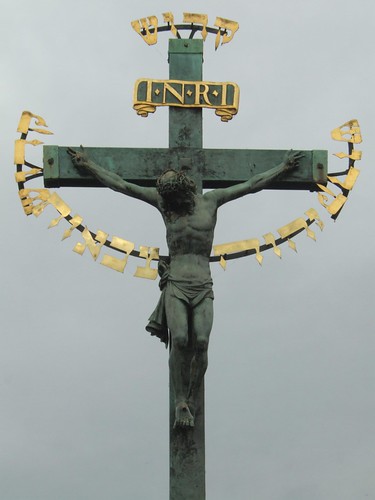
I do realize the importance of interfaith dialogue and all that, but after such miraculous story of disguise and survival, I'm uncomfortable to hear that these special scrolls found their way into Cathedrals and churches. For some odd reason, it brings me sad flashbacks of another major tourist attraction of Prague - the Crucifix with the Hebrew inscription of Kadosh, Kadosh. Oy!

_________________________________________________

You can also read this PDF for more info about the scrolls.

Wednesday, October 14, 2009

Bet of Bereishit and the Masechet Sofrim

The Mesechet Sofrim, one of the mini-Tractates of the Talmud, says:


The second statement is well known and all Sifrei Torahs have the large-type Bet at the start. However the commentary of the Masechet Sofrim, "Shehi Takim Leolam", is difficult to understand but I will leave it to you to come up with explanations.

I want to focus in the first statement - that the Bet should have four Tagim. The only time I saw this bet was in an old Tikkun, but the fact is that all modern day Torahs do not have these Taguim. This is how it should look, according to the Masechet Sofrim:


What's strange is that this Masechet Sofrim is a prime source and I had a tough time understanding how can we afford ignore it. For instance, the Gemara says that the "foot" of the Daled should be slightly bent and according to many opinions a Daled that has a straight "foot" will invalidate the Torah scroll. If we are so stringent about what's mentioned in the Gemara, why do we ignore what's mentioned in the Masechet Sofrim?

The answer to this question is interesting. Aside from the Masechet Sofrim, there's another even smaller Tractate called Masechet Sefer Torah. Most of the content of this little Masechta is anyways mentioned in its "big brother", the Masechet Sofrim, which includes Halachot of Sefer Torah, Mezuza, Tefillin and Mesora. Rabbi Chaim Kanievski, in his work on the small Tractates of the Talmud, asks why there's a need for both Masechtas if they are essentially dealing with the same topic.

His answer is quite radical. He says that the Masechet Sofrim is not part of the Talmud (written between 300 and 400 CE), but a later addition by the Geonim, who lived in the 6th century. Basically, the Geonim took one of the little Tractates of the Talmud - the Masechet Sefer Torah - and expanded it, creating the Masechet Sofrim, which deals with all Safrut related Halachot.

If so, Halachot only brought in the Masechet Sofrim do have less weight than the Halachot mentioned in the Talmud. The four Tagim of the Bet of Bereishit is a telling example of this phenomena and that's why we don't have them in our scrolls today.

Tuesday, July 14, 2009

Otiot Meshunot - Odd Letters of the Torah

In the Torah scrolls of today, there are very few scribal oddities and it's not so hard to single them out:
  • Large and small letters - example: the large Bet of the word Bereshit.
  • The inverted Nuns in the Parsha of Vayehi Binsoa.
  • The splitted Vav in the word "Shalom", in last week's Parsha.
  • Dots on top of specific words like "Hanistarot Lashem".
However, many old Sifrei Torah have many more oddities that are no longer in use today (see images). One of the most famous examples is the Peh Melufaf, which is still in use in the Teimani scrolls, and the Torah Shlema has an extensive list of these less popular odd letters. Also, there are numerous additional tagim that are often times mentioned by popular commentators like the Baal Haturim that also fell is disuse. 

 The Meiri compiled a very detailed work (Kriat Sefer) on the odd letters, depicting the oddities of the Torahs of his time. A more contemporary Sefer was written by the Badei Aharon roughly 150 years ago. There of course the ancient Sefer HaTagin (see image) , which according to tradition was copied by Eli HaCohen from the 12 stones of Yehoshua Bin Nun over two thousand years ago.

What are these letters? 

Various Geonim, Rishonim and Achronim have mentioned these letters and among them, the Rambam simply says that this is a very old tradition that should be observed. Few elaborate on the reason behind these oddities but the fact is that there was such a tradition and at some point this tradition was lost. But before the Second World War there was this "in-between" period where some communities accepted this tradition while others were very critical of it, arguing that this tradition was rather unreliable. This controversy gathered more attention when an old Torah scroll written by Beit Yehuda, a famous rabbi, was found to have numerous otiot meshunot. 

Also the first Rebbe of Zanz reportedly wrote his Sefer Torah with unusual Otiot Meshunot, and in both cases even those who didn't approve this Minhag were afraid to say bad about these Torahs, given their exceptional importance. 

 Following the devastating events of the Holocaust, few antique Torah Scrolls remained intact and the Mesora of the odd letters was wiped out alongside with the European shtetls. This topic is of special interest to me since I'm planning to start writing my own Sefer Torah soon. All these scribal oddities are so interesting and did feature in the Sifrei Torah of previous generations so I have to admit that I felt tempted to add some of these oddities in my own Torah. 

That's why I decided to study Rabbi Ratzabi's authoritative sefer on this subject, featured in the Torah Shelema, and now that I finished learning it I have another approach to this subject. Rabbi Ratzabi doesn't say if scribes should or shouldn't write the Otiot Meshunot but he somehow expounds how confusing and complex this topic is and it becomes clear that whoever decides to write the Otiot Meshunot will be putting himself in a sea of possibilities where there isn't a clear path to follow. That is the danger of following a Mesora that isn't yours; it's almost like inventing a Gezeira Shava out of your own mind, which is forbidden. The very few oddities that have been preserved in our scrolls have resisted the test of time and are our only undisputed Mesora. Here and there I hear of people talking about bringing back the Mesora of Otiot Meshunot but this page was turned after the Holocaust, as I noted above. Whatever is left of it is a living testament of the richness of the field of Safrut and how it evolved over centuries of Exile and persecutions.