I saw this beautiful picture the other day of an artist illuminating a Megillah. Enjoy
Showing posts with label jewish fonts. Show all posts
Wednesday, February 4, 2015
Picture
Labels:
amazing megilloy,
art,
Hebrew letters,
jewish fonts,
klaf,
meguila,
parchement,
purim,
scribe,
sofer
Monday, January 24, 2011
Ktav Ari
Check my previous post on the different Ashurit scripts before reading this one.
The Ktav Ari is one of Safrut's most fascinating topics for me. Actually, the Arizal in general always fascinated me, as few other individuals have impacted Judaism as much as he did.
First, it's important to understand who he was. Here is Wikipedia's take on him:
He was born in Jerusalem[1] in 1534 to an Ashkenazi father, Solomon, and a Sephardic mother;[6] died at Safed, Ottoman Empire controlled land of Israel July 25, 1572 (5 Av 5332). While still a child he lost his father, and was brought up by his rich uncle Mordechai Frances, on his mother's side, atax-farmer out of Cairo, Egypt.At the age of fifteen he married his cousin and, being amply provided for financially, was able to continue his studies. Though he initially may have pursued a career in business, he soon turned to asceticism and mysticism. About the age of twenty-two years old he became engrossed in the study of the Zohar, a major work of the Kabbalah that had recently been printed for the first time, and adopted the life of a recluse. He retreated to the banks of the Nile, and for seven years secluded himself in an
The Ari passed away at the early age of 38 but his teachings changed Judaism in an unprecedented manner.
Until his time, there were two scripts - Veillish and Beit Yosef. In fact, the Beit Yosef lived in the same town as the Ari and was that generation's main posek.

The Ari introduced a new script that wasn't entirely "new". He made a mix of the Veillish and Beit Yosef, a new Ktav that incorporated characteristics of both scripts. Namely, he incorporated the "inverted Tzadi" from Veillish but also the Ashkenazi Peh. He did introduce some very subtle novel details based on his Kabbalistic teachings, but all in all, the major change was the inverted Tzadi. And he was heavily criticized for that "change".
Perhaps he was inspired by his hibrid Ashkenazi/Sephardic upbringing to make this new "intermediary" ktav. The Ari believed his generation needed some specific "Tikkunim" and he adapted the way we write our holy scrolls to achieve these mysterious Tikkunim. For instance, the white Bet inside the Peh, the Chaf within the Shin and the Chet comprised of a Vav and a Nun. But above all, he instructed scribes to write the Shem Hashem in a very unique and difficult way - in parts - based on the Zohar. All these are very subtle details that are inspired by his Kabbalistic teachings and he sought to perpetuate them in his Ktav - the Ktav Ari.
The Ari's changes were recorded by his student Rabbi Chaim Vital and it was clearly intended to be used only when writing Tefillin. But why only in Tefillin? That's subject to debate, but the most compelling reason I've heard is that changes motivated by Kabbalistic reasons shouldn't be evident when a person reads a scroll. It's ok to make a change that is subtle and hidden but to do it in a Torah Scroll, for instance, would be too evident and undesirable. The parshiot of Tefillin, in the other hand, are always hidden and if a scribe makes special details in it nobody will actually realize. That's why the Ari was very specific about using his Kabbalah-inspired Ktav only in Tefillin.
You are surely thinking "what about Mezuza?", after all the Mezuza is also hidden. I haven't heard a very good answer but I have my own speculation. Even though the Mezuza is hidden, the word Sha-dai is always visible (it should be, at least in theory) and you would be able to notice that the Ari Shin is different than the usual one.
Be it as it may, the Chassidic scribes always wrote Tefillins with the Ktav Ari - that custom was universally accepted by them. I don't know if that was the case with Sephardic Jews. I do know that the non-Chassidic Ashkenazi Jews never adopted the Ktav Ari in the scrolls.
It's hard to pin point an exact date, but slowly the Chassidic scribes started to use the Ktav Ari in Mezuzot and even Sifrei Torah, and today virtually all Chassidic sects have Ktav Ari Sifrei Torah in the Synagogues. It's hard to understand what's their justification as the Ari clearly did not intend to change the way Mezuzot and Torahs are written. In fact, I would bet that the Ari's own Sefer Torah was written in either Veillish or Ktav Ashurit; not Ktav Ari.

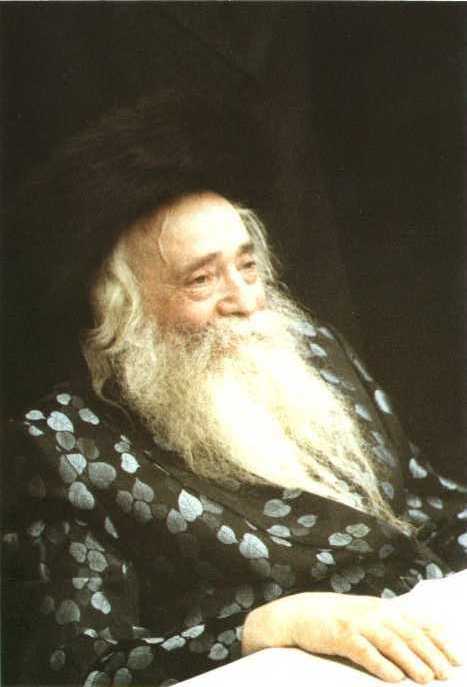
One Chassidic Rabbi was very critical of this practice - the holy Divrei Yatziv of Zanz (make sure you read about his remarkable life story on wikipedia). He had a special Kisharon for Halachot pertaining to Safrut (for instance, he figured out a revolutionary way to make the Batim of the Tefillin - but that's a topic for another post) and was very much against the use of Ktav Ari in Sifrei Torah, even for writing the Shem Hashem.
But Minhag Israel Torah and there's Halachic backing for writing Torahs with the Ktav Ari. The Mishnat Avraham (source) says that there's no problem to write Torah Scrolls with the Ktav Ari and bless the scribes who do it - "Tavo Alav Bracha". And he brings an Halachic justification for it: the Sefer Torah should be written in the same way Tefillin are, because if you write Tefillin with Ktav Ari and Torahs with Ktav Beit Yosef this will cause a Tartei DeSatrei (contradiction) when a person gets an Aliyah. Tartei DeSatrei is a well-established Halacha argument and perhaps this is why Chassidic Sofrim started to write all holy scrolls in Ktav Ari - even Megillat Esther.
The question is what should I do when I start writing my Torah (yes, I plan to start it very soon). Ktav Ari or Beit Yosef?
My teacher writes Sifrei Torah in Ktav Ari and when he is commissioned to write a Torah in Ktav Beit Yosef he writes the Shem Hashem according to the Ari but makes sure this is not evident (he is afraid the commisioners might realize and dissaprove it..). I found that the Kol Yaakov mentions here that this was the Minhag of the scribes of his city, Baghdad.
At first I was thinking I would do the same, but I recently realized it wouldn't make sense to do that in my case. Here's why:
Although I'm not really Chassidic, my father's name is Yekutiel Yehuda - the name of the Divrei Yatziv of Zanz - after my grandfather's father and my grandmother was born in Cluj/Klausenburg, the town where the Divrei Yatziv lived. The Tefillin I wear each and every day was written by a far away relative who lives in Netanya and is a Zanz Chassid. And on top of that, I married into a family of Zanz sympathizers, having a Sheva Brachot in Netanya hosted by the current Rebbe of Zanz. It's crucial to follow a Mesora (tradition) otherwise a scribe can get lost in all the different customs and nuances of Sta"m, so I have always followed the directives of the Rebbe of Zanz in regards to Safrut - I highly recommend his newly published Sefer on the Halachot of Sta"m, a book I always come back to.
Thursday, February 11, 2010
The New and Old Peh
If you look at old Ashkenazi Torah Scrolls, Tefillin and Mezuzot, you will always note a very distinctive Peh. This old Peh has a "hunchback" and almost looks like something is wrong with it.
This Peh is referred to as the "Peh Shavur", or "Broken Peh". You can see the Peh Shavur in this old Yeriah I own:
What happened? Why and how the Peh suddenly "changed"?
Let's use reverse chronological order, that is, first understand the modern Peh. The source to the modern Peh is the Mishna Berura, who clearly rules that you should avoid using the broken Peh:
Then it came the First and Second World Wars, and many of the old scribal traditions were forgotten - including the old Peh. Following the wars, the rulings of the Mishna Berura became even more influential in communities around the world and the next generation of Sofrim relied heavily in the Mishna Berura's take on the Hebrew letters, effectively ignoring the controversies surrounding this ruling. That's how the modern Peh became the standard Peh in all subsequent holy scrolls.
But if you look at pre-war Torahs and Tefillins, you will often find the old Peh, specially in scrolls of eastern Europe and Russia.
For almost all readers, this is just a history lesson. But for the Chabad readers, this post is a eye-opener. The Alter Rebbe, author of the Tania, clearly writes that the broken Peh is a must and all Chabad sofrim have kept this tradition even after the wars. Thus, the Chabad communities have their own version of the Ktav Ashurit, which is different than the Ashkenazi, Chassidic and Sephardic scripts. This is known as the ktav Chabad, and the broken Peh is one of its signature characteristics. See the full Aleph Bet Chabad below:
You can also see the special Kuf, Mem Sofit and Tet prsent in this Ktav.
The Ktav Chabad is exactly the same Ktav used by the communities of Eastern Europe and Russia before the war. So the Ktav Chabad has survived the war to become one of the last standing old-European scripts in use, remarkably. Now you understand the tradition among the Chabad Chassidim that their Ktav is the most accurate and that when Moshiach comes it will become the standard script for all Jews. Perhaps it will.
UPDATE: In reponse to the questions raised in the comments thread, I did some further research and here's what I came up with. My source is Sofer Lipshitz, one of the most knowledgeble Sofrim I know, who happens to be Chabad. The real Old Peh, which is the modern-day Chabad Peh, ideally should have a smooth hunchback and not a real step - see this picture (note that the Chabad Aleph Bet picture above is not very precise):
However, there are many different versions of this hunchback Peh and some of them are a bit less precise then others. The Peh of my manuscript is one of these less precise Pehs - it's more than a slight hunchback and it really looks "Shavur", and perhaps this imprecise version of the Peh prompted the Ktiva Tama to protest against what he considered to be a "broken Peh/ Peh Shavur" and the Mishna Berura agreed with his claim. But as Zalman and Jskarf mentioned, it's very likely that the Mishna Berura didn't have any complaints against the precise version of the original Peh, which is roundish in the outside. Still, the "new and improved" Peh became extremely popular and it now our generation's standard Peh. In regards to the Chabad Sefer Torah of my Shul, it turns out to be that it is also an imprecise old Peh - not a slight hunchback but a very clear broken Peh. This is a small imprecision of the author of this Torah; the Chabad Peh should be roundsish in the outside. Yudi sent me the Peh of his shul's 120 years-old Sefer Torah and it seems to me that this is a perfect old Peh; not broken and round in the outside (click to enlarge):
This Peh is referred to as the "Peh Shavur", or "Broken Peh". You can see the Peh Shavur in this old Yeriah I own:
What happened? Why and how the Peh suddenly "changed"?
Let's use reverse chronological order, that is, first understand the modern Peh. The source to the modern Peh is the Mishna Berura, who clearly rules that you should avoid using the broken Peh:
הג"ה ולא כמה שנהגו איזה סופרים לעשות עקב מבחוץ בצדה ... כי הוא ממש אות שבור. ובאמת צריך להיות עגול מבחוץ כמו שכתבנו ... ומה שנהגו כך מפני שאינם יודעים ההרגל לעשות לתפוס הקולמוס באלכסון ולהמשיכה מעט לאחוריה הקולמוס בפנים ... עכ"ל ספר כתיבה תמה בקיצור לענינינוThe Mishna Berura quotes the Sefer Ketiva Tama as the source of this ruling, claiming that the broken Peh is a mistake that should be avoided. When the Mishna Berura was first printed in the late 19th century, this ruling created a big controversy and debates in communities that had a long-standing tradition of using the broken Peh, and many Sofrim continued to write it in their old way for many years.
Then it came the First and Second World Wars, and many of the old scribal traditions were forgotten - including the old Peh. Following the wars, the rulings of the Mishna Berura became even more influential in communities around the world and the next generation of Sofrim relied heavily in the Mishna Berura's take on the Hebrew letters, effectively ignoring the controversies surrounding this ruling. That's how the modern Peh became the standard Peh in all subsequent holy scrolls.
But if you look at pre-war Torahs and Tefillins, you will often find the old Peh, specially in scrolls of eastern Europe and Russia.
For almost all readers, this is just a history lesson. But for the Chabad readers, this post is a eye-opener. The Alter Rebbe, author of the Tania, clearly writes that the broken Peh is a must and all Chabad sofrim have kept this tradition even after the wars. Thus, the Chabad communities have their own version of the Ktav Ashurit, which is different than the Ashkenazi, Chassidic and Sephardic scripts. This is known as the ktav Chabad, and the broken Peh is one of its signature characteristics. See the full Aleph Bet Chabad below:
You can also see the special Kuf, Mem Sofit and Tet prsent in this Ktav.The Ktav Chabad is exactly the same Ktav used by the communities of Eastern Europe and Russia before the war. So the Ktav Chabad has survived the war to become one of the last standing old-European scripts in use, remarkably. Now you understand the tradition among the Chabad Chassidim that their Ktav is the most accurate and that when Moshiach comes it will become the standard script for all Jews. Perhaps it will.
However, there are many different versions of this hunchback Peh and some of them are a bit less precise then others. The Peh of my manuscript is one of these less precise Pehs - it's more than a slight hunchback and it really looks "Shavur", and perhaps this imprecise version of the Peh prompted the Ktiva Tama to protest against what he considered to be a "broken Peh/ Peh Shavur" and the Mishna Berura agreed with his claim. But as Zalman and Jskarf mentioned, it's very likely that the Mishna Berura didn't have any complaints against the precise version of the original Peh, which is roundish in the outside. Still, the "new and improved" Peh became extremely popular and it now our generation's standard Peh. In regards to the Chabad Sefer Torah of my Shul, it turns out to be that it is also an imprecise old Peh - not a slight hunchback but a very clear broken Peh. This is a small imprecision of the author of this Torah; the Chabad Peh should be roundsish in the outside. Yudi sent me the Peh of his shul's 120 years-old Sefer Torah and it seems to me that this is a perfect old Peh; not broken and round in the outside (click to enlarge):
Labels:
alter rebbe,
jewish fonts,
ktav ashurit,
ktav chabad,
mesora,
minhag
Tuesday, July 21, 2009
Esnoga's Scrolls
The Esnoga is one of the most important historic synagogues of the world and it was built during the golden years of the Jewish community of Amsterdam. My family was there for a visit and they brought me some pictures of the scrolls featured in the adjacent Jewish Museum. The Museum's site doesn't have any pictures so I took the liberty of sharing it with my readers in this blog entry.
All of them are unique and showcase the elegance and taste of the Dutch Jews of that era.
The Megillat Esther below has some very beautiful illustrations in between each column and is written is a very odd layout - 30 lines (see my post on this subject here) and each line is way too long (each line should ideally have 30 letters, which is three times the word "lemishpechotam", but in this scroll there are more than 60 letters per line). The letter Peh has a very different shape, with a big Tag in the left top corner.
This other Megilla has 32 lines, also not standard, but the lines have the proper amount of letters. What catches my attention is the arrangements of the Parshiot - if you look carefully you will see that the Parsha of "איש יהודי" is written in the middle of the line and "אחר הדברים האלה" has a very odd layout - it starts almost where the preceding line ended. According to our Mesorah, all the Parshiot of Megillat Esther should have a Setuma layout (see my post on this subject here) and if so, this Sofer followed the Rambam's opinion of Setuma and Petucha.
Next is my personal favorite, a Sefirat Haomer scroll. This is the first time I see such scroll and it takes a little time before you actually understand what's going on. The top box is the days' count - 46 days; the middle and bottom boxes are the week's count.
Last but not least, this antique Torah scroll written in Veilish script (read more here). The top Lamed in this Sefer torah is almost bent backwords, opposite to the Lamed of our modern scrolls, which are slightly bent forward.
All of them are unique and showcase the elegance and taste of the Dutch Jews of that era.
The Megillat Esther below has some very beautiful illustrations in between each column and is written is a very odd layout - 30 lines (see my post on this subject here) and each line is way too long (each line should ideally have 30 letters, which is three times the word "lemishpechotam", but in this scroll there are more than 60 letters per line). The letter Peh has a very different shape, with a big Tag in the left top corner.
This other Megilla has 32 lines, also not standard, but the lines have the proper amount of letters. What catches my attention is the arrangements of the Parshiot - if you look carefully you will see that the Parsha of "איש יהודי" is written in the middle of the line and "אחר הדברים האלה" has a very odd layout - it starts almost where the preceding line ended. According to our Mesorah, all the Parshiot of Megillat Esther should have a Setuma layout (see my post on this subject here) and if so, this Sofer followed the Rambam's opinion of Setuma and Petucha.
Next is my personal favorite, a Sefirat Haomer scroll. This is the first time I see such scroll and it takes a little time before you actually understand what's going on. The top box is the days' count - 46 days; the middle and bottom boxes are the week's count.
Last but not least, this antique Torah scroll written in Veilish script (read more here). The top Lamed in this Sefer torah is almost bent backwords, opposite to the Lamed of our modern scrolls, which are slightly bent forward.
Labels:
esnoga,
esther scroll,
jewish fonts,
meguila,
rambam,
torah scroll
Saturday, May 2, 2009
Jewish Fonts - A Guide for the Different Ktavim
Although all Holy scrolls are written in Ktav Ashurit, there are many subdivisions within this script. Additionally, there are other fonts that are not related to Ktav Ahurit, so I think it's worthwhile to talk a little about the Jewish Fonts.
Let's start from the beggining. There's a discussion in the Talmud if the Luchot given in Har Sinai were given in Ktav Ashurit (the font we use today) or perhaps Ktav Ivri, an obscure and completely different font. We follow the opinion that the Luchot were given in Ktav Ashurit.

So right from the start, we have two fonts: Ashurit and Ivri. The Ktav Ivri is also known as "Paleo-Hebrew Alphabet" and you can see a full verse from Tanach in the pic in the right. It's way easier to write Ktav Ivri than Ashurit - it's basically sketches rather than an artistic alphabet and I imagine it would be a lot easier to write a Sefer Torah in Ktav Ivri.
Another font that became very popular is Rashi's Script, which is commonly found in Chumashim, Talmud and commentators. This font was introduced in the 15th century and it is still printed today in a standard way, that is, with no variations. If you take to account the quantities of Talmuds, Mishnayot, Peirushim out there that use this script, it's no exaggeration to claim that this script has become more popular than the Ktav Ashurit, only found in
the holy scrolls.
But I'll spend more time talking about the different versions of the Ktav Ashurit, since this is the script we use for all scrolls and most people have no clue about this. There are four versions:
However, if you can choose between these four versions of Ktav Ashurit, why not make the right choice? Most people who buy Tefillin or Mezuzot don't really pay any attention about the version used by the scribe but just like anything else in life you should make an informed decision. And I will try to organize it for you here.
If you are Sefardi, it's easy - buy a Tefillin/Mezuza/Torah written in Veillish. The easiest way to identify this ktav is through the Shin, which has a distinctive round base like this
(you can see a full sample in the end of this post)
For the Ashkenazim it's more tricky. If you are not Hassidic go Beit Yosef, which is the standard and most popular version. But for the Hassidic readers I need to first give the big picture.
The Arizal script was introduced by the Ari, in the 1500's. Before him, the Ashkenazim basically wrote in a uniform way, but the Ari, with his unmatched Kabalistic knowledge, pushed for a few changes in the Ktav Ashurit. He also introduced a new way of writing the Holy Shem, according to the Kaballa and many sofrim today write it this way (click here for my post about the Holy Shem). But what most people overlook is the fact that the Ari only pushed for changes in the Tefillin, not in the Torah scrolls. The Ari never intended to change the way our Torah scrolls are written and that's when the confusion starts.
Most Hassidic scribes today write not only Tefillins, but also Torah scrolls and Mezuzas in Ktav Arizal. Frankly, I don't know why, but that's a fact. One of the few Hassidic sects who oppose this practice is the Tzanz dynasty, since the Divrei Chaim was very clear about writing the Torah in Ktav Beit Yosef and Tefillins in Ktav Ari.
So if you are Hassidic, you should order a Ktav Arizal Tefillin. But if you one day hire a sofer to write you a Torah, make sure you ask your Rebbe if you should use Ktav Ari or Beit Yosef. Anyways, it's easy to identify an Arizal ktav - the Chet and Shins look like this:

On top of all this mess there's the Chabad Ktav, introduced by the Alter Rebbe. I heard from a fellow Chabad scribe that the Alter Rebbe once said that when Mashiach comes this will be the main Ktav, but the fact is that the Chabad Ktav is the least popular of all the four versions of the Ktav Ashurit. This Ktav is very similar to the Ktav Arizal, but you can identify it by the exquisite Lamed and Peh:

So, if you are still reading this, yes, there are many Jewish Fonts. And next time you order a
scroll, make sure you choose the one that is right for you!
_______________
Samples:


From left to right: Sephardi, Beit Yosef, Arizal and Chabad.
Let's start from the beggining. There's a discussion in the Talmud if the Luchot given in Har Sinai were given in Ktav Ashurit (the font we use today) or perhaps Ktav Ivri, an obscure and completely different font. We follow the opinion that the Luchot were given in Ktav Ashurit.
So right from the start, we have two fonts: Ashurit and Ivri. The Ktav Ivri is also known as "Paleo-Hebrew Alphabet" and you can see a full verse from Tanach in the pic in the right. It's way easier to write Ktav Ivri than Ashurit - it's basically sketches rather than an artistic alphabet and I imagine it would be a lot easier to write a Sefer Torah in Ktav Ivri.Another font that became very popular is Rashi's Script, which is commonly found in Chumashim, Talmud and commentators. This font was introduced in the 15th century and it is still printed today in a standard way, that is, with no variations. If you take to account the quantities of Talmuds, Mishnayot, Peirushim out there that use this script, it's no exaggeration to claim that this script has become more popular than the Ktav Ashurit, only found in
the holy scrolls.But I'll spend more time talking about the different versions of the Ktav Ashurit, since this is the script we use for all scrolls and most people have no clue about this. There are four versions:
- Beit Yosef
- Ariz"al
- Chabad
- Veilish (Sefardic)
However, if you can choose between these four versions of Ktav Ashurit, why not make the right choice? Most people who buy Tefillin or Mezuzot don't really pay any attention about the version used by the scribe but just like anything else in life you should make an informed decision. And I will try to organize it for you here.
If you are Sefardi, it's easy - buy a Tefillin/Mezuza/Torah written in Veillish. The easiest way to identify this ktav is through the Shin, which has a distinctive round base like this
(you can see a full sample in the end of this post)For the Ashkenazim it's more tricky. If you are not Hassidic go Beit Yosef, which is the standard and most popular version. But for the Hassidic readers I need to first give the big picture.
The Arizal script was introduced by the Ari, in the 1500's. Before him, the Ashkenazim basically wrote in a uniform way, but the Ari, with his unmatched Kabalistic knowledge, pushed for a few changes in the Ktav Ashurit. He also introduced a new way of writing the Holy Shem, according to the Kaballa and many sofrim today write it this way (click here for my post about the Holy Shem). But what most people overlook is the fact that the Ari only pushed for changes in the Tefillin, not in the Torah scrolls. The Ari never intended to change the way our Torah scrolls are written and that's when the confusion starts.
Most Hassidic scribes today write not only Tefillins, but also Torah scrolls and Mezuzas in Ktav Arizal. Frankly, I don't know why, but that's a fact. One of the few Hassidic sects who oppose this practice is the Tzanz dynasty, since the Divrei Chaim was very clear about writing the Torah in Ktav Beit Yosef and Tefillins in Ktav Ari.
So if you are Hassidic, you should order a Ktav Arizal Tefillin. But if you one day hire a sofer to write you a Torah, make sure you ask your Rebbe if you should use Ktav Ari or Beit Yosef. Anyways, it's easy to identify an Arizal ktav - the Chet and Shins look like this:


On top of all this mess there's the Chabad Ktav, introduced by the Alter Rebbe. I heard from a fellow Chabad scribe that the Alter Rebbe once said that when Mashiach comes this will be the main Ktav, but the fact is that the Chabad Ktav is the least popular of all the four versions of the Ktav Ashurit. This Ktav is very similar to the Ktav Arizal, but you can identify it by the exquisite Lamed and Peh:

So, if you are still reading this, yes, there are many Jewish Fonts. And next time you order a
scroll, make sure you choose the one that is right for you!
_______________
Samples:


From left to right: Sephardi, Beit Yosef, Arizal and Chabad.
Labels:
alter rebbe,
arizal,
divrei chaim,
jewish fonts,
ktav arizal,
ktav beit yosef,
ktav chabad,
tzanz
Sunday, March 15, 2009
Rashi Vs. Rabbeinu Tam - Round 1
One of the classic discussions among the commentators of the Talmud is between Rashi (11th century) and his nephews, known as the Tosafists. There are many famous discussion between them but in this blog we focus in Safrut and there are two classical discussions pertaining to this subject. We will deal with one of them in this post.
Rashi and Tosafos disagree in regards to the exact shape of the letter Chet in the Jewish Alphabet. A very short briefing: The Talmud says that there's a special "tag" (sketch) on top of the letter Chet, which points upwards symbolizing that God, who's up in the heavens, is eternal since the letter Chet is connected to the word "Chai", to be alive. Rashi and Tosafot explain differently the shape of this mystical sketch.
Rashi says that it is a simple sketch in the left side of the Chet like this
while Tosafot says that there's a "pyramid" (a.k.a. "the hunch of a camel") in the very middle of the letter like this
, essentially two connected Zains (you can see the original page of the Talmud, where this discussion is to be found, here)
That means that the grandsons (Tosafists) had a different Torah Scroll than their grandfather (Rashi), a striking fact. And the Halachic implication of these two versions is not simple - a Sefer Torah that has some Chets like Rashi and some like Tosafot might be pasul, so the rabbis decided to adopt a "blend" of the two versions, which we still use to this very day:
(my own hand-writing). The Sephardim have a slightly different version ->
.
But this is not the end of the story. A few hundred years later the Ariza"l (16th century), the most revered Kabbalist, introduced a few changes in the letters of the Torah and one of the affected letters is the Chet. Instead of two connected Zains, the Ari wrote the Chet with a Vav and a Zain, like this
.
Clearly, the Chet is the most controversial letter of the Hebrew alphabet and now you know why!
Rashi and Tosafos disagree in regards to the exact shape of the letter Chet in the Jewish Alphabet. A very short briefing: The Talmud says that there's a special "tag" (sketch) on top of the letter Chet, which points upwards symbolizing that God, who's up in the heavens, is eternal since the letter Chet is connected to the word "Chai", to be alive. Rashi and Tosafot explain differently the shape of this mystical sketch.
Rashi says that it is a simple sketch in the left side of the Chet like this
while Tosafot says that there's a "pyramid" (a.k.a. "the hunch of a camel") in the very middle of the letter like this
, essentially two connected Zains (you can see the original page of the Talmud, where this discussion is to be found, here)That means that the grandsons (Tosafists) had a different Torah Scroll than their grandfather (Rashi), a striking fact. And the Halachic implication of these two versions is not simple - a Sefer Torah that has some Chets like Rashi and some like Tosafot might be pasul, so the rabbis decided to adopt a "blend" of the two versions, which we still use to this very day:
.But this is not the end of the story. A few hundred years later the Ariza"l (16th century), the most revered Kabbalist, introduced a few changes in the letters of the Torah and one of the affected letters is the Chet. Instead of two connected Zains, the Ari wrote the Chet with a Vav and a Zain, like this
.Clearly, the Chet is the most controversial letter of the Hebrew alphabet and now you know why!
Tuesday, February 24, 2009
Ktav Ashurit and the Modern Day Siddurim
First a very brief intro: there's a discussion in the Talmud in regards to what font was featured in the original Luchot. We follow the opinion that it was given in Ktav Ashurit, the very same font we use in all holy scrolls.
According to Judaism, just like the Torah was given in Ktav Ashurit, the world was created by God with these letters and therefore every single letter has unspeakable importance. It's no wonder that a large segment of the Kaballa deals exclusively with understanding the Ktav Ashurit letters - this is a mystical font. In fact, Halacha states even a non-holy text that was written in Ktav Ashurit letters should be treated like a holy text, since the font itself is holy. That's how important this Ktav is.
But when it comes to prayer books, it's hard to find Ktav Ashurit fonts. For some reason, the Siddurim we use today are not written in Ktav Ashurit font; rather, every publisher creates a new patented font when it comes to prayer books and Chumashim. The most popular is Artscroll’s, a modern and neat font that is used in everything the company publishes from Siddurim, Tehillim or Chumashim (see pic in the right). But a few communities have pushed for the usage of Siddurim that use the Ktav Ashurit font, most notably the Sefardic communities and some Hassidic (more specifically, Toldos Aharon and Biali) sects and it’s possible to find them with a little effort.
It’s much easier to find Sefardi editions of Ktav Ashurit siddurim, but I’m Ashkenazi and I bought the two editions I managed to find. The first is a modern and computerized version (if you are looking for one online, see here), only for the weekdays, and the second is a copy of a hand-written siddur (which some rabbis favor over the computer version) - see pictures below. Being a Sofer, I use these Siddurim rather than the popular Artscroll version since I prefer to stick to the millennium-old font rather than a modern day invention… but that’s just me.
According to Judaism, just like the Torah was given in Ktav Ashurit, the world was created by God with these letters and therefore every single letter has unspeakable importance. It's no wonder that a large segment of the Kaballa deals exclusively with understanding the Ktav Ashurit letters - this is a mystical font. In fact, Halacha states even a non-holy text that was written in Ktav Ashurit letters should be treated like a holy text, since the font itself is holy. That's how important this Ktav is.
But when it comes to prayer books, it's hard to find Ktav Ashurit fonts. For some reason, the Siddurim we use today are not written in Ktav Ashurit font; rather, every publisher creates a new patented font when it comes to prayer books and Chumashim. The most popular is Artscroll’s, a modern and neat font that is used in everything the company publishes from Siddurim, Tehillim or Chumashim (see pic in the right). But a few communities have pushed for the usage of Siddurim that use the Ktav Ashurit font, most notably the Sefardic communities and some Hassidic (more specifically, Toldos Aharon and Biali) sects and it’s possible to find them with a little effort.It’s much easier to find Sefardi editions of Ktav Ashurit siddurim, but I’m Ashkenazi and I bought the two editions I managed to find. The first is a modern and computerized version (if you are looking for one online, see here), only for the weekdays, and the second is a copy of a hand-written siddur (which some rabbis favor over the computer version) - see pictures below. Being a Sofer, I use these Siddurim rather than the popular Artscroll version since I prefer to stick to the millennium-old font rather than a modern day invention… but that’s just me.
Computerized Ktav Ashurit Siddur
Hand-written version
Subscribe to:
Comments (Atom)