For many years now, I use my spare time to research Safrut throughout the ages and also for writing as a Sofer Stam (currently busy with my own Sefer Torah).
Here you will find revealing articles about this ancient art and you will also keep track of my progress.
As a Sofer I have spent countless hours looking at letters and also studying different concepts and ideas brought down in Chazal in the field of Safrut. By definition a Sofer is a copyist, and my job is do write my Torah Scroll as uniformally and perfectly as possible, without much room for creative work.
When I started in Safrut, I even considered adopting the obsolete Mesora of Otiot Meshunot for my personal Torah, as these letters are a great medium for creative and artistic work. I quickly realized it was a bad idea, as the mesorah of these odd letters is lost and not in use, so how could I write a scroll with a lost mesora? The whole point of a Torah Scroll is adhering to the accepted mesora of our day, and that's what I did in the end.
I'm exploring my creative urge in Safrut in a different way. I developted a design concept that is rooted in a sofer's work and also in many commentaries in the Torah - the concept of the interplay between Black Fire (written letters of the Torah) and White Fire (invisble letters that surround the written letters).
According to tradition, the white letters will be revaled in the future, and we can only ponder what they actually are. It's hard to visualize how these invisible letters will actually appear in the Torah Scroll, as our scrolls today are so simple and unidimensional. But the invisible letters are there, and it is said in the name of the Arizal that while all Jews have a corresponding letter in the Torah, this personal letter might be actually not a written letter but an invisible one located in the blank klaf (by the way, this is way many have the minhag of looking at the Torah Scroll at the time of Hagba in shul, as the Ari said that you might evetuallt peek at your letter and connect to it).
My design is an attempt to crystalize this interplay between visible and invisble letters, and I got inspired when writing my recent post on the Four Legged Shin of the Tefillin. This odd letter is precisely one of the invisible letters which surround a normative written Shin, and it got me thinking how each letter from the Hebrew alphabet can relate to others. The most obvious combination is the famous Peh-Bet interplay, which scribes always make sure to create whenever writing a Peh in the Torah (with a small inner Bet). But there are many other possibilities, for example, a Yud inside a Kuf and so on.
My first design variation is called Black and Color Fire, which is the best way to visualize how a black letters might be surrounded by many other invisible letters (represented by the colored letters) at any given time.
Then you have the fully colored design, called Color Fire, which is more uniform and perhaps more pleasing to the eye.
Lastly, I made a B&W version called Black and White Fire, which was the hardest but surely my favorite. It was a challenge to form the letters using only grayscale colors, because it's harder to spot the different letters around the canvas. It brings me back to the black and white scheme of the Torah Scroll, which is the pallete I always face when writing.
These designs are available for everyday items, as there's no reason why we should not be constantly reminded of the sanctity of the Hebrew letters and their relevance to our daily lives. While a Torah Scroll is mostly kept safe out of eyesight, my design is made with our modern world in mind and with the intention of bringing scribal ideas out in the wild. You have shabbos mugs, backpacks, phone cases and pillows. Soon you will be able to buy Mezuzot as well. It's more traditional then my wacky Banana art Mezuzah, which was really my first attempt at creating a Judaica piece.
The Tefillin shel Rosh has the distinctive feature of possessing a regular Shin in its right side, and a bizarre four legged Shin in the opposite side. Considering that the Tefillin is a very popular and publicly displayed Mitzva, most people are aware of this strange four-legged Shin but few know the story behind it. We we will explore this topic in this post.
The Talmud in Shabbat 62a and in Menachot 35a brings in the name of Abaye that the "Shin, Daled and Yud of the Tefillin are all 'Halacha LeMoshe Misinai'" i.e. an oral tradition dating back to Sinai. The comentators note that there are allusions to the Daled and Yud in the Tefillin's knots, and these allusions are not literal but rather loosely based in the letters Daled and Yud - see diagram on the right. Only the Shin is clearly written as a full fledged letter.
Before we delve into the Shin, which stands out from the other two letters, it's worthwhile mentioning the great controversy in regards to the Daled which is related to our topic - how to identify the letters in the Tefillin.
Up to a few hundred years ago, all communities - Ashkenazi, Sephardi and Yemenite - had the same Daled-style knot in the back of the head and it looked like a square knot (also referred to as Double Daled knot) - see image below. Looking at the Original Daled (below), it's not immediatedly evident the resemblance to the letter Daled but if you consider two Daleds, connected to each other, you can arrive at that picture. Then it came the "new Daled", which is more like a single letter Daled and more immediatedly identifiable.
Rabbi Fleckless (1754-1826), a student of the Noda BiYuda, writes in his response (link here) that we must keep the established square knot, and refrain from adopting the "new daled knot which has surfaced around 50 years ago... and we only have our tradition to rely on (square Daled)". We can gather that the new Daled shape (also called Single Daled knot) was introduced in the 18th century by the influence of Kabbalah, and Rabbi Fleckless (like his teacher) was a staunch traditionalist and fought any changes introduced by Hassidim based on Kabbalistic ideas (other changes include the Leshem Yichud prayers before Miztvot, which I explored in an earlier post).
The new, single Daled knot proved to be very popular and with the expansion of the Hassidic movement in Europe and also with the wide adoption of Kabala by the Sephardic communities, the Single Daled eventually became the standard knot present in most Tefillins sold in the marketplace. I've seen this phenomena in my own family - while my grandfather has the square knot, most of my cousins today have single Daled knots in their Tefillins - only because the new Daled is the standard in the shops and they didn't pay attention.
From this discussion, we can already glean that the letters in the Tefillin are very loosely based on the actual scribal letters used in scrolls and not meant to be actual letters. The same used to be the case with the Shin - it wasn't originally a full fledged letter as we have today in our Tefillins, and like the Daled knot - which with time evolved to be more clearly identified with the letter - the Shin also underwent transformations.
While the Talmud does not elaborate on the nature of the Shin, early sources point out to a possibility that the original allusion to Shin was actually just the actual shape of the Tefillin shel Rosh - the four different compartments resemble the Shin when looked straight on (or from the back) - see picture to the right. Rav Elyakim, a tosafist (quoted by the 13th century work Or Zarua), brings this possible explanation along with the more popular and accepted tradition - writing the shape of the Shin in the sides of the box.
The Box itself looking like a Shin of 4 heads (black part)
Also possible to observe a traditional Shin of 3 heads if you focus in between the compartments
Notwithstanding this novel Shin allusion brought by Rav Elyakim, the prevailing custom throughout the ages evidently is to write Shins on the sides of the boxes. The earliest clear mention of the Shins in the sides of the Tefillin is the Shimusha Raba (who, by the way, has a different order of the four parshiot in the Tefillin unlike Rashi and R. Tam - explored here), an ancient work on Tefillin from the Gaonic period (roughly 589-1000CE):
"צורה דשין דימינא ג' רישי, ודשמאלא ד'
רישי, ואי אפיך לית לן בה"
"The shape of the right Shin is with three heads, and of the left is four heads. And if he made the opposite, it is of no concern"
Note how this passage only talks about three and four heads - that’s no coincidence; the original tradition was to write only the Shin lines without a base. The base of the Shin was the actual Tefillin Box base, serving as a flat base, as we learn from the talmud the the Shin should be touching the base (וצריך שיגיע חריץ למקום התפר) and the lines were not even very clear scribal letter - just lines (see below).
Ancient Tefillin, where the Shins are only lines touching the box base (source). See another example here
As time passed, people started to made the Shin look more and more like the scribal shin, abandoning an allusion to an actual literal interpretation, leaving no mistake that this is a Shin. However, the Tefillin producers were carefull to always make sure the Shin is touching the base of the box even with the modified custom.
Rabbi Yosef Karo writes explicitly, that "he heard that the Ashkenazi Jews make the Shins as simple lines... but we make them as actual printed letters... and go out to see what is the custom today (printed letters)". (see source here, midway through the page: ושמעתי שהאשכנזים נזהרים בכך, שמקמטים העור במלקט על ידי כפילה שכופל מהעור עד שנעשים סעיפי השיני"ן בחקיקת ירכות. אבל אנו נוהגים לעשות השיני"ן בדפוס, וגם בארחות חיים כתוב שיש אומרים שאין לחוש בזה, ופוק חזי מאי עמא דבר, עד כאן לשונו)
It is clear that the Shin in the Tefillin went through some significant transformation over time. Rabbeinu Simcha even writes that one should not "change from the old minhag of simple lines. If he wrote as an actual printed letter...we don't have the power to invalidate it" - a clear indication that he favors the early custom. (in hebrew: וזה לשון הגהות בברוך שאמר, בשם רבינו שמחה: ושי"ן אין לשנותה ממנהג זקנים, שהיו עושין בקמט של עור הבית. ומיהו אם עשאה בדפוס, או כתבה בדיו על בית לבן, אין בידינו לפוסלה, עד כאן לשונו)
Now that we have established the two options of displaying the two Shins - either simultaneously in the shape of the actual box of the Tefillin or as two actual letters in the sides - we must understand what is the need of showing the second Shin.
There are two forms of writing in Hebrew. One is what is referred to as “Moshe Rabeinu’s writing”, which is the standard writing method of a quill and parchment. The other writing form is the Ktav of the Luchot - Decalog, which was not written as a Torah Scroll but through carving in stone - and it was a Godly work, delivered to Moshe at Sinai. In this form of writing, the letters are formed by the surrounding space made from stone. The letters themselves are hollow, nothing on their own. When writing a Shin, the surrounding space of the standard Shin looks like a four-legged Shin.
According to Kabbala, the written Torah is only a part of our Torah - the surrounding spaces (i.e. negative spaces) are also part of the Torah but they are not revealed to us readily. They are mostly concealed, but they can make up sentences and a whole different level of teachings.
The extra Shin is there to symbolize the hidden Torah from the surrounding letters, perhaps to remind us we only have access to part of the Torah. We can only speculate about the novel letters and wordings that will be revealed in later days, but I have seen an interesting drawing that helps illustrate how many possibilities there can be.
Interporsing possible wordings within letters
Famous interplay between Pei and inner Bet
The Arizal (quoted here ) says that a person should look at the Torah Scroll after the weekly portion, when the Torah is displayed to the congregation (hagba’a), because every Jew has a corresponding letter in the Torah and perhaps he will find his if he looks for it.
I've also heard in the name of the Ari, a person who yearns for wealth will have a letter connected to a word or sentence in the Torah relating to money. Someone who is drawn to helping people or healing people will be drawn to a letter corresponding to this topic. But, says the Arizal, a Jew can have not a letter but an empty space surrounding the letter of the Parsha and that carries meaning and relates to the person in some esoteric way. Hence, the written and blank spaces in the Torah scroll are equally important, and that is the message of the two Shins in the Tefillin.
I suspect that this can also explain one well established scribal tradition in the beginning of the Torah. While the tradition relating to extra tagim in the Torah as brought by the ancient Sefer HaTagim has been lost, scribes still do four extra tagim in the Bet of Bereishit - one of the very few surviving extra Tagim in our modern day Torahs. Perhaps these four lines convey the same message of the four-legged Shin of the Tefillin - it relates to the other writing form which was found in the Luchot. While our Torah Scroll is written in the traditional way, we keep tagim that look a four-legged Shin in the very first letter of the Torah to allude to the invisible Torah, just like we do in the Tefillin, because the written Torah and space surrounding it are actually one unit, although we only have access to the Torah we see in writing.
As we have seen, the shape of the Shin in the Tefillin evolved through time and it carries a great deal of symbolism. The Shin is also the main feature of the Mezuza, which has the Shin Daled Yud inscribed in the outside of the parchment and the widespread custom is to write a Shin in the outside of the Mezuza case - similar to what’s done in the Tefillin shel Rosh. The Tefillin and Mezuza have this commonality, and they stand out in regards to the importance attached to the Shin, one of Judaism‘a most mystical and beautiful letters.
א"ר אבין בר רב אדא א"ר יצחק מנין שהקב"ה מניח תפילין שנאמר (ישעיהו סב, ח) נשבע ה' בימינו ובזרוע עוזו בימינו זו תורה שנאמר (דברים לג, ב) מימינו אש דת למו ובזרוע עוזו אלו תפילין שנאמר (תהלים כט, יא) ה' עוז לעמו יתן ומנין שהתפילין עוז הם לישראל דכתי' (דברים כח, י) וראו כל עמי הארץ כי שם ה' נקרא עליך ויראו ממך ותניא ר' אליעזר הגדול אומר אלו תפילין שבראש
In short, the Talmud says that even God himself dons the Tefillin (!) and that the Tefillin relate to the passage "all the people of the world will see the name of Hashem in you, and they will fear you" - they will see the Tefillin shel Rosh and become fearful. Throughout the ages, the Tefillin has been a staple of Jewish life with amulet-like status, and archeologists even found them in Qumran, dating over 2000 years, and they look very similar to ours today - that alone, a great feat and giant testament of how well we kept our traditions, if if there were some minor tweaks in the body of the Tefillin.
The Talmud in Berachos 13a mentions in passing a classic Talmudical dispute if Mitzvot need intent (מצוות צריכות כוונה) or not. For instance, if someone eats Matza in Pessach without any intent - just eats it - did he fulfill his obligation? This is a major topic of discussion that affects all Miztvot, and the Halacha seems to require a person to have some sort of intent, or at least not a negating intent, to perform the Miztva.
Many Rabbis encouraged the recital of a short pre-Miztva prayer, which usually is הרני מזמן את פי - a verbal declaration that the person is focusing in what he will shortly do. This concept is accepted by all streams of Judaism, as it is always a good idea to prepare ourselves and verbally declare that we are conscious before performing a Mitzva.
The Kabbala movement brought this concept a step further, and added another dimension to the preparatory prayers - a prayer that our Mitzva will have a mystical impact in the celestial worlds. This prayer is called לשם יחוד, and it's mentions the Shechina, the Tetragammon and how this name is divided - all very complicated and deep Kabbalah concepts - and the inclusion of this in the daily prayers was novel and controversial. The actual basic Leshem Yichud text is:
לשם ייחוד קודשא בריך הוא ושכינתיה בדחילו ורחימו , לייחד שם י"ה בו"ה בייחודא שלים בשם כל ישראל
For the sake of the unification between the Holy Blessed One and His Shechinah with fear and love, in order to unify the Name Yood Hey and Wav Hey in perfect unity, and in the Name of all Israel.
Rabbi Landau - Noda Biyuda
Not all Rabbis were in favor of adding this prayer in everyone’s routine. Most notably, the Noda BiYehuda (Rabbi Landau d. 1791, leader of the European Jewry in the 18th century) wrote a famous sharp condemnation of those promoting the Leshem Yichud and famously declared that וחסידים יכשלו בם, paraphrasing the Pasuk ופושעים יכשלו בם - in effect, calling the Hassidim sinners, for he contended that this Kabbalistic prayer couldn't be understood even by learned scholars therefore it was not appropriate to encourage the commonfolk to recite it. One should contextualize his harsh opposition to his era - a time when Hassidism was revolutionary to conservative leaders like Rabbi Landau (parentethically, Rabbi Landau's descendants attempted to remove this "name calling" in subsequent editions of the Noda BiYehuda, as the Hassidic movement grew and remained part and parcel of normative Orthodox Judaism - source and blog post).
Rabbi Falkeles, a disciple from Rabbi Landau, testifies that he once saw a pious man asking Rabbi Landau to use his beautiful Etrog for a bracha (Etrogim were very rare in Europe at that time, even more so nice Etrogim), and when he saw the man saying a Kabbalistic preparatory prayer - Yehi Ratzon - Rabbi Landau objected and declared that no one reciting any preparatory prayers had permision to ever use his Etrogim (source here).
Rabbi Landau, like the Vilna Gaon, held that a Bracha is in itself a preparation for the Miztva and therefore there was never any need of adding prayers before saying the blessing of any Miztva. When a Mitzva has no Bracha, for example when writing a Sefer Torah, then the Noda BiYehuda concedes that a preparatory prayer is warranted, in order to confirm a person's awareness, and his actual prayer was short and to the point (source):
הנני עושה דבר זה לקיים מצות בוראי "I'm doing this in order to fulfill my Creator's Miztva"
Rabbi Jacob Emden, a contemporary of Rabbi Landau and another influential (and controversial) leader, did include the Leshem Yichud prayer in his popular Siddur, the Yavetz Siddur, however he noted that his father, the famous Chacham Tzvi Ashkenazi, used to follow Kabbalistic guidelines but was careful not to do so publicly. In other words, Rabbi Emden addresses Rabbi Landau’s concern that this prayer is not intended for everyone and advises readers to recite it privately, like his own father used to do.
Notwithstanding the objection of some traditionalist leaders, most communities around the world adopted the custom of reciting the Leshem Yichud before Mitzvot, most notably the Sephardic Jews, who had always favored the adoption of Kabbala in their daily routine, and Hasidim, whose movement was sparked by Kaballa (also why the Siddurim of the Sephardim and Hasidim are so similar). And today, even non-Chassidic communities have accepted this prayer, and one can find this prayer in the ArtScroll siddur today before Pesukei DeZimrah, for instance. Eitan Katz, a popular Jewish Music singer, even composed a Leshem Yichud song (embedded below). We can safely say that the controvery died out over the centuries, and no one will scream at you for saying such prayer today, anywhere.
Most German Jews, who follow the Ashkenaz minhag did not adopt the Leshem Yichud as they generally followed the opinion of the Noda BiYuda. It’s also interesting to note that Belz Chassidim to this day have the custom of not saying Leshem Yichud before Birkat Sefirat HaOmer in the Yahrtzeit of the Noda BiYuda, which falls in Sefirat HaOmer, in deference to his position.
updated: The previous Zanz Rebbe, the Shefa Chaim, is one of the only Hasidic personalities who sided with the Noda Biyuda and to this day, Zanz hasidim do not say Leshem Yichud on Sefirat Haomer. In the compendium of Zanz minhagim "Halichot Chaim", it's written that the Rebbe would never say Leshem Yichud on other mitzvot as well, with the notable exception of when arranging the Pessach Keara according to the Arizal. At that moment the Rebbe did say a special kabbalistic prayer, however not in other occasions.
After this general overview, I would like to focus in the impact of preparatory prayers in the field of Safrut specifically.
Chazal demand an extreme level of focus when writing Mezuza, Tefillin and Torahs (aka Sta”m), and pre-writing prayers and concentration are almost mandatory, not merely advised. The Keset HaSofer (פרק ד), which is the last word in Halacha for Sofrim, writes:
סת״ם צריכין לכתוב אותם בכוונה גדולה לשמה וצריך שיאמר כן בפיו... ואם לא הוציא כן בשפתיו אלא שחשב כן בלבו יש פוסלים אפי׳ בדיעבד.
Sta”m must be written with a high level of concentration - lishma - and (the scribe) must say it verbally... if he didn’t say it with his lips but only thought in his heart there are those who invalidate the scroll even Bedievad.
Hence we can see that unlike other Miztvot, where we can find room for leniency, the lack of focus will invalidate the scribes’ entire work even before he gets started. Imagine a whole Sefer Torah invalidated on this account - a year’s work immediately deemed unfit.
According to accepted Halacha, the pre-writing prayer said when starting a Sefer Torah suffices for the whole scroll, even if the scroll will take many years to be completed. Without this initial sanctification, the validity of the whole scroll is in serious question. Even according to those who oppose preparatory prayers, as we have seen above, there's no Bracha for writing a Sefer Torah and therefore no existing framework for a demonstration of intent. Therefore, even they will agree that a Sofer must say loudly that he intends to perform the Miztva.
The same principle applies one step before, in the process of manufacturing the parchment for writing. The very first moment of the production requires a verbal declaration that the work is being done lishma - for the sake of the Mitzva. Therefore if the worker fails to make this declaration at the start, the resulting parchment will be invalid and the Keset HaSofer writes ואין להקל i.e. there’s no room for leniency. It's interesting that this is so, as the Miztva per se is the writing of the Sefer Torah while the parchment production is only an Hechsher Mitzva (enabling the Miztva) and I would think that perhaps there's a way out in case of emergency. That's what the Keset says - no room for lenience, period.
The actual wording of this verbal declaration is also crucial. When manufacturing parchment for Mezuza, for instance, the worker will need to specifically say עורות אלו אני מעבד לשם מזוזה - I’m working these hides for the sake of (the Mitzva of) Mezuza. It's important to note that this very declaration is only valid if the parchment will indeed be used for a Mezuza. However, a parchment that will be used for Tefillin, the worker must be specifically declare it for Tefillin - ideally (there's perhaps room for leniency if you declared intention for a Tefillin but used the parchement for a Torah because of the concept of Maalim Bakodesh - one may increase the sanctity once there's a valid declaration).
In practice, the klafim makers usually produce the parchment with a conditional declaration - “I’m working these hides for either a Mezuza, Tefillin or a Torah, to be decided at a later date”. This is called a parchment produced “al tnai”, on a condition, and the Keset writes (פרק ב) that a person can rely on this option בשעת הדחק, as a last resort. But it's better to use a non-conditional parchement for sure.
So which klafim are usually sold in the market today? I learned it the “hard way”. When I purchased klafim for my Sefer Torah, the package got stuck in customs when the seller mailed it to me. I was quite upset because the authorities wanted to charge me a fortune for import taxes. So I called the klafim maker and after a chat, I discovered that these hides were “conditional hides” and he said that he could take them back if I purchased more expensive non-conditional parchments. Yes, there’s a substantial difference in price between the two, and while I assumed I was buying the very best, this whole situation enabled me to exchange my purchase for a much more "mehudar" option.
This is the level of trust involved in the work of a Sofer, because the scribe has to source his material from a trusted source and even a good source can give you less then optimal products. In turn, the private buyer has to trust the Sofer, and the source where the Sofer got his materials from. That's quite a leap of faith.
Therefore a Sofer or any aspiring buyer of Judaica scrolls must be vigilant and - here is the difficult part - know the Halacha. We live today in an age that many think that everything can go as long as you mean well. Unfortunately, in the world of Safrut, this is wishful thinking and there are many things that will go wrong without proper due diligence and knowledge. Hoping for the best will only get you in trouble.
One of these “danger spots” is the pre-Mitzva declaration which we have explored. That’s how important this short prayer is, and the impact it has in a holy scroll.
I will conclude with the recommended pre-writing prayer as mentioned in the Lishchat HaSofer:
1- before writing, the Sofer must recant for his sins.
2- he should recite the Kabbalistic prayer אנא בכח גדולת ימנך תתיר צרורה וכו׳
3- he should recite this personal prayer: יהי רצון מלפניך ה׳ או״א שתשרה שכינתך במעשה ידי ותצליכני בכותבי זאת שאני כותב ספר תורה זה לשם קדושת ספר תורה ותצילני מטעות הכתיבה ומטעות הכוונה אמן כן יהי רצון
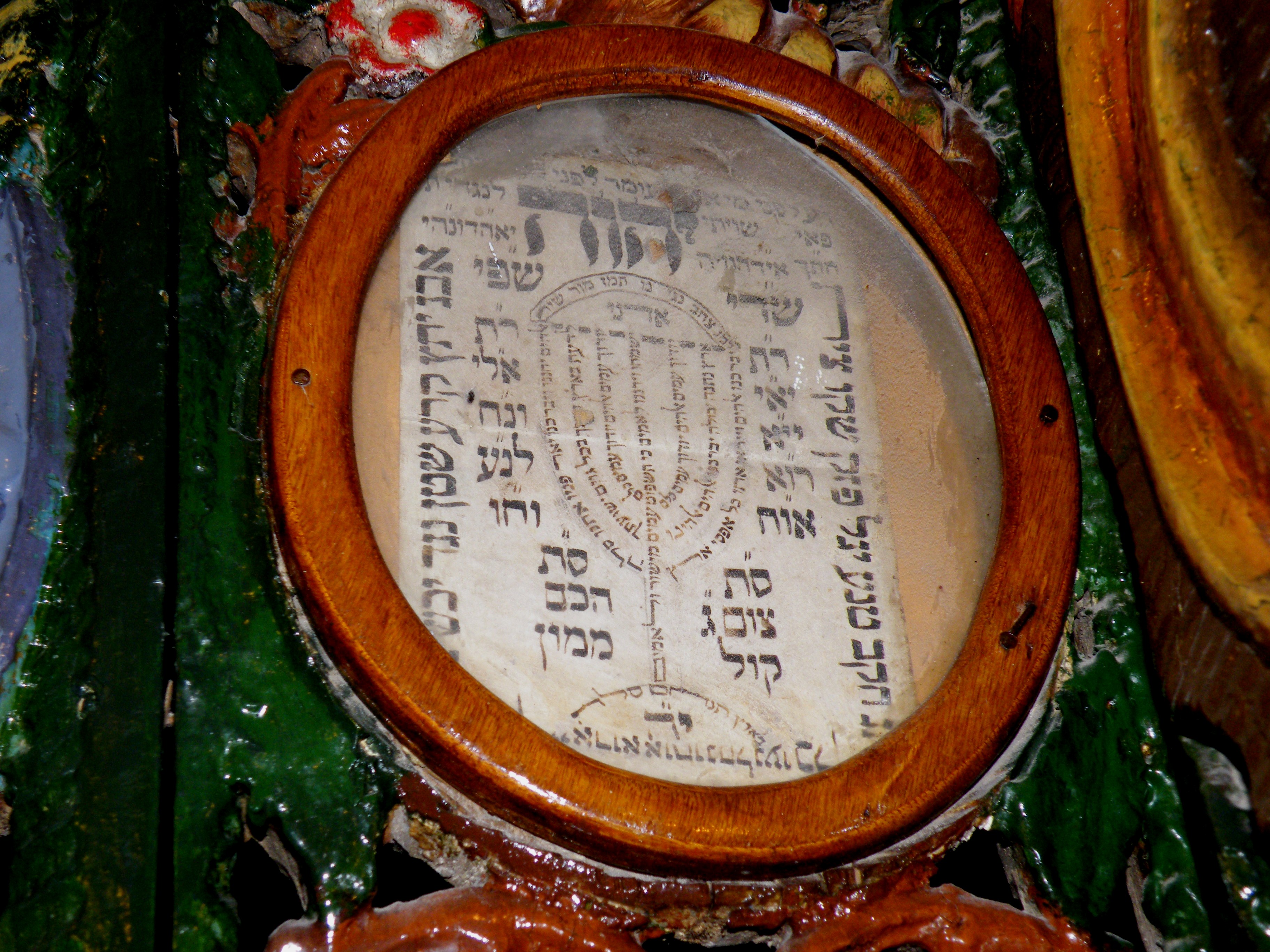
What's the source of the Menora-shaped Lamnatzeach? I touched on this subject last year but now I will write it in full.
The earliest source, I believe, is the Abudrahem, a student of the Baal Haturim (son of the Rosh) who lived in 14th century spain (see inside the Sefer here)
ובמקצת מקומות אומרין אותו כל יום מפני
שנקרא מזמור המנורה והקורא אותו בכל יום נחשב
כמדליק
המנורה הטהורה בבית המקדש
וכאלו מקבל
פני שכינה כי תמצא בו ז׳ פסוקים כנגד שבעה קני
המנורה
In some places (the Lamnatzeach) is recited every day since (this psalm) is called the Psalm of the Menorah and when you recite it everyday, it is considered as you lit the Menorah in the Beit Hamikdash (...)
The Abudrahem goes on to explain that this Psalm has 49 words which relate to the 49 different parts of the Menorah - thus why we always recite this Psalm after counting the 49 days of the Omer.
Another possible early source for this claim is the Ramban, who reportedly brings this same commentary in one of his letters adding that it should be recited specifically at sunrise, but this letter is not to be found presently.
Rabbi Yitzhak Haezovi (Turkey, 15th Century), in his sefer Agudat Ezov, confirms that there's a tradition that "whoever recites this Psalm throughout the 49 days of Omer nothing bad will happen to him that year". Perhaps you shouldn't take this lightly because he adds that King David took this very seriously:
"This Psalm was engraved in gold in King David's shield, made like the shape of the Menorah and when he went to wars he would meditate upon it (...) and with it he would win his enemies"
Added for illustration purposes (2026)
The Agudat Ezov goes on to say that it's good to have it embroidered in the Aron of the synagogue to protect the community - which explains why you always see this Menora Lamnatzeach in the Sephardic shuls today. Another early Kabbalist that mentions this is the Akeidat Yitzhak, who was one the last Rishonim who lived in the Golden Years of Spain's Jewry in the 15th century, and he pretty much mirrors what the Agudat Ezov said - see here in full.
TheChida, one of the greatest Kabbalists of the 18th century, adds that it should be recited from Klaf - parchement (direct source here).
I must also highlight this fascinating piece from the Ben Ish Chai, arguably the most respected Kabbalist of the 19th Century and a household name in every Sephardic home, who says that you don't need specifically klaf - any paper is fine according to him - but he adds a powerful twist:
כשאומר למנצח בנגינות מזמור שיר המצוייר בצורת המנורה על קלף או על נייר, יזקוף את הציור של המנורה שמסתכל בו כדי שיהיה הציור זקוף לפניו כדמיון המנורה שהיתה זקופה ועומדת בהיכל ולא יניח הציור מושכב ושטוח לפניו
"When you recite Lamnatzeach written in the shape of the Menora either on Klaf or on a paper, you should hold it standing so you can see it in front of you just like the Menora which was standing in the Heichal, rather than leave the drawing flat"
Fascinating comment. I bring it because it illustrates how dear this Psalm is to all Kabbalists, early and contemporary, to such an extent that they even instituted it in the everyday prayers of the 49 days of the Omer, something that today is standard practice in virtually all Jewish communities. From there, as the Abudrahem mentioned above, some people started to say this Psalm every day and, as we see today in our Siddurim, it is recited just before Baruch Sheamar in Shacharit (nusach sephard and edut mizrach). That placement is puzzling because the Ari, who basically reorganized what is today Nusach Sefrad and Edut Mizrach, actually said that we should mention it at the end of Amida, right before Elokai Netzor:
ולכן יהיה תמיד נגד עיניך גם תאמר בכל יום אחר תפלת ערבית ומנחה ושחרית אחר העמידה קודם אלקי (full text here, difficult read) נצור מזמור ס"ז והוא מזמור למנצח בנגינות מזמור שיר
I've seen that Rabbi Pinchas Zbihi brings why we recite it before Baruch Sheamar; something to do with the daily ritual of the lighting of the Menora but that's beyond the scope of this already complicated post.
Interestingly, Rabbi Zbihi elsewhere says that the Abudrahem - who said that reciting Menora Lamnatzeach is like lighting the Menora - might explain why we say it every weekday mornings but not on Shabbat. If it is like lighting the Menora that is a forbidden Melacha (!) and that might explain why our Siddurim have another Psalm in its place.
The big question is why the vast majority of Siddurim don't print this Menora layout both before Baruch Sheamar and also by Sefirat Haomer. As we have seen, the point is not only to recite this Psalm but to recite it in this specific shape and we rarely see this in contemporary siddurim.
But to finalize this post, I must mention a very practical consideration. There is a very famous discussion concerning the exact look of the Beit Hamikdash's Menora and this has implications for the Lamnatzeach Menora. The Maase Choshev says that the Menora was curved, as seen in the infamous Arch of Titus and many archeological findings. It happens to be the the vast majority of Menorah Lamnatzeachs today indeed follow this layout, as seen below:
There's one major problem with this layout - it's very difficult to make round "Sirtut" (guiding lines) and as the Talmud in Sanhedrin notes, it's forbidden to write more than four words in parchement without guiding lines. Aside this technical problem, Rashi and Maimonides held that the Menora was not curved but straight - the late Lubavitch Rebbe actively advocated (see Likkutei Sichot vol. 21) to spread this layout and that's by the way why all Chabad's public Menoras in Chanukka are always straight. For these reasons, there's an alternative Lamnatzeach:
I however never saw this layout in any synagogue; it's not very popular. But a third layout, which is squared and doesn't conform with any of the two opinions mentioned above, is extremely popular and present in many Chassidic synagogues. It is also printed in my Ktav Ashurit Siddur:
I speculate that because of the Sirtut problem in the rounded layout, Sofrim started to write the round Lamnatzeach in this way which resembles the rounded scheme and at the same time has regular straight guiding lines (Sirtut).
Last week I received a long awaited shipment of red Gvil parchement and it was just big enough to write a Lamnatzeach Menora. I used the square layout because I think it's the nicest and also because it's the middle way between the rounded and the straight Menora. I will record my experience with this Gvil in another post.
Although all Holy scrolls are written in Ktav Ashurit, there are many subdivisions within this script. Additionally, there are other fonts that are not related to Ktav Ahurit, so I think it's worthwhile to talk a little about the Jewish Fonts.
Let's start from the beggining. There's a discussion in the Talmud if the Luchot given in Har Sinai were given in Ktav Ashurit (the font we use today) or perhaps Ktav Ivri, an obscure and completely different font. We follow the opinion that the Luchot were given in Ktav Ashurit. So right from the start, we have two fonts: Ashurit and Ivri. The Ktav Ivri is also known as "Paleo-Hebrew Alphabet" and you can see a full verse from Tanach in the pic in the right. It's way easier to write Ktav Ivri than Ashurit - it's basically sketches rather than an artistic alphabet and I imagine it would be a lot easier to write a Sefer Torah in Ktav Ivri.
Another font that became very popular is Rashi's Script, which is commonly found in Chumashim, Talmud and commentators. This font was introduced in the 15th century and it is still printed today in a standard way, that is, with no variations. If you take to account the quantities of Talmuds, Mishnayot, Peirushim out there that use this script, it's no exaggeration to claim that this script has become more popular than the Ktav Ashurit, only found in the holy scrolls.
But I'll spend more time talking about the different versions of the Ktav Ashurit, since this is the script we use for all scrolls and most people have no clue about this. There are four versions:
Beit Yosef
Ariz"al
Chabad
Veilish (Sefardic)
All scripts have the same Halacha status and are Kosher for any Jew, since the differences are very slight. Rabbi Ovadia Yosef, the foremost authority of the Sefardic Jews today, proves this extensively in his sefer Yebia Omer and before him the Kaf Hachaim claims the same, so there's nothing to fear - whatever script you have is okay.
However, if you can choose between these four versions of Ktav Ashurit, why not make the right choice? Most people who buy Tefillin or Mezuzot don't really pay any attention about the version used by the scribe but just like anything else in life you should make an informed decision. And I will try to organize it for you here.
If you are Sefardi, it's easy - buy a Tefillin/Mezuza/Torah written in Veillish. The easiest way to identify this ktav is through the Shin, which has a distinctive round base like this (you can see a full sample in the end of this post)
For the Ashkenazim it's more tricky. If you are not Hassidic go Beit Yosef, which is the standard and most popular version. But for the Hassidic readers I need to first give the big picture.
The Arizal script was introduced by the Ari, in the 1500's. Before him, the Ashkenazim basically wrote in a uniform way, but the Ari, with his unmatched Kabalistic knowledge, pushed for a few changes in the Ktav Ashurit. He also introduced a new way of writing the Holy Shem, according to the Kaballa and many sofrim today write it this way (click here for my post about the Holy Shem). But what most people overlook is the fact that the Ari only pushed for changes in the Tefillin, not in the Torah scrolls. The Ari never intended to change the way our Torah scrolls are written and that's when the confusion starts.
Most Hassidic scribes today write not only Tefillins, but also Torah scrolls and Mezuzas in Ktav Arizal. Frankly, I don't know why, but that's a fact. One of the few Hassidic sects who oppose this practice is the Tzanz dynasty, since the Divrei Chaim was very clear about writing the Torah in Ktav Beit Yosef and Tefillins in Ktav Ari.
So if you are Hassidic, you should order a Ktav Arizal Tefillin. But if you one day hire a sofer to write you a Torah, make sure you ask your Rebbe if you should use Ktav Ari or Beit Yosef. Anyways, it's easy to identify an Arizal ktav - the Chet and Shins look like this:
On top of all this mess there's the Chabad Ktav, introduced by the Alter Rebbe. I heard from a fellow Chabad scribe that the Alter Rebbe once said that when Mashiach comes this will be the main Ktav, but the fact is that the Chabad Ktav is the least popular of all the four versions of the Ktav Ashurit. This Ktav is very similar to the Ktav Arizal, but you can identify it by the exquisite Lamed and Peh:
So, if you are still reading this, yes, there are many Jewish Fonts. And next time you order a scroll, make sure you choose the one that is right for you! _______________ Samples: From left to right: Sephardi, Beit Yosef, Arizal and Chabad.
One of the classic discussions among the commentators of the Talmud is between Rashi (11th century) and his nephews, known as the Tosafists. There are many famous discussion between them but in this blog we focus in Safrut and there are two classical discussions pertaining to this subject. We will deal with one of them in this post.
Rashi and Tosafos disagree in regards to the exact shape of the letter Chet in the Jewish Alphabet. A very short briefing: The Talmud says that there's a special "tag" (sketch) on top of the letter Chet, which points upwards symbolizing that God, who's up in the heavens, is eternal since the letter Chet is connected to the word "Chai", to be alive. Rashi and Tosafot explain differently the shape of this mystical sketch.
Rashi says that it is a simple sketch in the left side of the Chet like this while Tosafot says that there's a "pyramid" (a.k.a. "the hunch of a camel") in the very middle of the letter like this , essentially two connected Zains (you can see the original page of the Talmud, where this discussion is to be found, here)
That means that the grandsons (Tosafists) had a different Torah Scroll than their grandfather (Rashi), a striking fact. And the Halachic implication of these two versions is not simple - a Sefer Torah that has some Chets like Rashi and some like Tosafot might be pasul, so the rabbis decided to adopt a "blend" of the two versions, which we still use to this very day: (my own hand-writing). The Sephardim have a slightly different version -> .
But this is not the end of the story. A few hundred years later the Ariza"l (16th century), the most revered Kabbalist, introduced a few changes in the letters of the Torah and one of the affected letters is the Chet. Instead of two connected Zains, the Ari wrote the Chet with a Vav and a Zain, like this .
Clearly, the Chet is the most controversial letter of the Hebrew alphabet and now you know why!




 Posts
Posts

